
Are German Shepherds Good With Kids?
Plenty of families ask this before they actually dive in. And honestly, it’s a valid concern. Dealing with a 70-pound dog that has deep-rooted guarding instincts when you’ve got little kids running around isn’t something you just shrug off.
Short answer? Yeah, German Shepherds can be incredible with children. Some of the most solid family dogs are GSDs. But look, the longer answer is the one that really counts. It hinges on the specific dog, how it was raised, the way your kids act, and the effort you put into making the whole dynamic work. That’s the real “secret sauce” here.
The Honest Answer
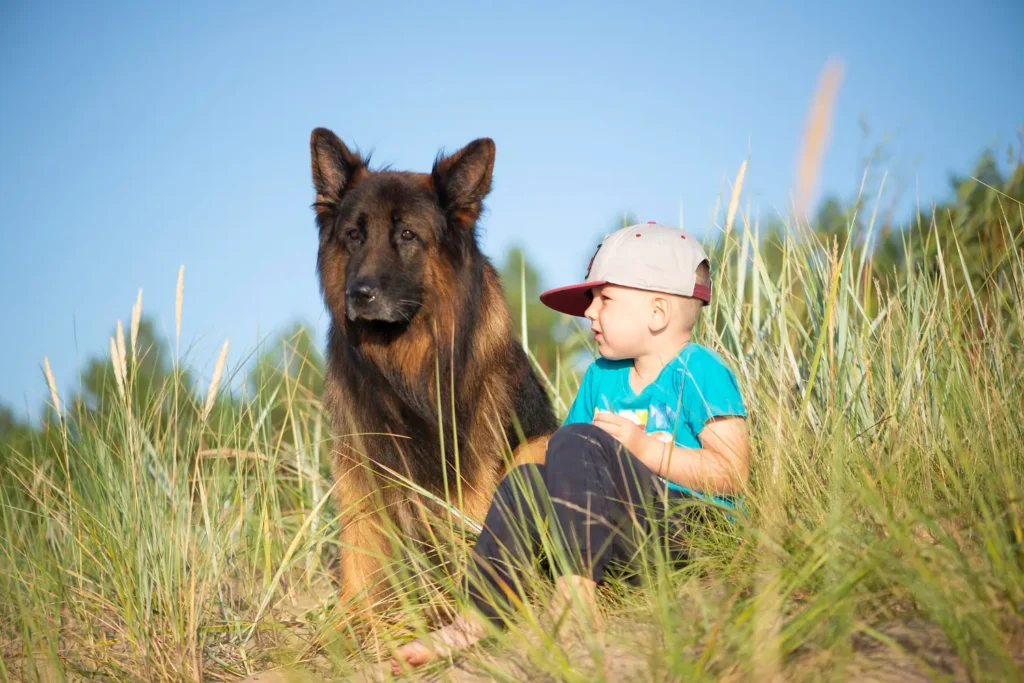
If a German Shepherd is raised alongside kids, socialized the right way, and actually gets some training, they’re almost always amazing. They’re patient, they can play rough, and that protective vibe that makes people nervous is usually what keeps a child safe in the end.
Usually, when things go sideways, it’s because of one of three things: the dog wasn’t exposed to enough stuff early on, it’s got zero training and way too much energy, or the kids just weren’t taught how to respect a big dog. You can’t really blame the breed for that.
The AKC standard describes these dogs as confident, brave, and approachable. A dog that fits that description isn’t a risk. It’s the fearful or bored ones you have to watch out for—and honestly, that’s true for any breed, not just Shepherds.
German Shepherds with Babies and Toddlers
This is the part that really stresses parents out, and for good reason.
Let’s face it, babies and toddlers have zero boundaries. They shriek, they grab at things, and they move in the most random ways. If a dog isn’t used to that kind of chaos, it can be a lot for them to handle.
A Shepherd that’s grown up in a house with little kids already knows the drill. The noise, the mess, the sticky hands pulling on their fur… none of it really rattles them. They get what kids are, and honestly, most of them end up acting more like a furry babysitter than any kind of threat.
Now, bringing a new baby home to a dog you already have is a bit of a different story. If you’ve got a GSD and a baby is on the way, you’ve got to do some prep work. Toss them a blanket the baby used so they can get used to the scent first. When the big meeting happens, keep it chill. Dog on a leash, calm vibes, and no big drama. If you act like it’s a normal Tuesday, the dog will probably think so too.
Still, supervision is a must. It’s not even about the dog being “dangerous”, it’s about physics. A 75-pound dog doesn’t need to be mean to accidentally knock a toddler over just by moving too fast.
The American Academy of Pediatrics says kids under six shouldn’t be left alone with any dog, no matter the breed. That’s a pretty solid rule to live by with Shepherds, too. No matter how much you trust them, it’s just common sense.
German Shepherds with Older Kids
This is exactly where these dogs really stand out. When you have school-age kids or teens who can actually keep up, the bond with a German Shepherd becomes something pretty special.
Basically, GSDs are all about matching energy. If you’ve got an eight-year-old who’s constantly outside running around or throwing a ball, they’ve found their match. These dogs live for that kind of interaction. The devotion they show to a kid who keeps them active is honestly hard to put into words, you kind of have to see it to get it.
It’s also great to get older kids involved in the training process. It really solidifies that bond. When a ten-year-old learns how to give a command and actually stays consistent with it, the dog starts to respect them as a leader. It’s a win-win for everyone involved.
The only real “red flag” to look out for is when play gets a bit too intense. Shepherds can get over-excited, and that’s when you see the jumping, the “play-nipping,” or that classic herding behavior where they try to circle the kids. It’s all stuff you can fix with training and some firm rules, but you definitely want to nip it in the bud before it just becomes “the way they play.”
What Makes a GSD Good With Kids

The protective instinct works in your favor
People worry about this trait, but in a family context it usually works the other way. A bonded GSD watches over the children in its household. They notice when something is off, they position themselves close to kids in unfamiliar situations, and they take that guardian role seriously without being asked.
There is a real difference between a dog that is protective and one that is aggressive. A well-raised GSD is the former. More on that distinction here.
They read people well
German Shepherds are perceptive. They pick up on tone of voice, body language, and emotional state faster than most breeds. A dog that can tell the difference between a child playing and a child in distress is a safer dog to have around kids. GSDs often alert to situations before adults even notice something is wrong.
High energy is an asset with active kids
Most family dogs struggle to keep up with children. A German Shepherd does not have that problem. They want to run, they want to play, and they have the stamina to match what kids can throw at them. For families with active children, this is a feature, not a concern.
That energy does need an outlet though. A GSD that is not getting enough exercise is a harder dog to live with. An hour of real activity daily is the baseline for most adults, more for younger dogs.
Trainability makes them manageable
A well-trained German Shepherd is one of the most manageable large dogs you can have. They respond to commands reliably, they generalize what they learn, and they retain training long-term. That trainability is what lets you set rules around the kids and have them actually stick.
Consistent obedience training from early on is not optional with this breed in a family setting. It is what makes everything else work.
What Can Go Wrong
Not to scare anyone off, but it is worth knowing what the actual risks are, because they are manageable once you know them.
Size and accidental force
A full-grown male GSD can weigh 90 pounds. Even the most gentle dog at that size can knock over a small child by bumping into them or jumping up to greet them. Teaching a GSD not to jump is one of the first things to address in a household with young kids. Not because the dog is dangerous, but because physics.
Herding instinct
Some of these dogs will try to “herd” children. If the kids start running, the dog’s brain just clicks into work mode. They might nip at heels or try to circle them up. It’s pure instinct, but it’s annoying and it scares kids. You have to shut that down with training before it becomes a permanent habit.
Under-socialized dogs
A GSD that did not get proper socialization during the critical window (roughly 3 to 14 weeks) can be anxious or reactive around children. The AVSAB is clear that early socialization has more long-term impact on dog behavior than almost any other factor. A dog that missed that window can still be worked with, but it takes more effort and patience.
Resource guarding
Some German Shepherds guard food, toys, or their resting spots. Around kids who do not know to respect those boundaries, this can become a problem. Teaching children not to approach the dog while eating, not to take toys from the dog’s mouth, and not to disturb the dog while sleeping goes a long way. If resource guarding is significant, it is worth addressing with a trainer before it escalates. The aggression page has more on identifying and handling this.
How to Introduce a German Shepherd to a Child
Whether it is a new puppy meeting your kids for the first time, or an older dog being introduced to a child, the approach is the same: calm, controlled, positive.
- Have the child stand still or sit on the floor rather than running toward the dog
- Let the dog approach at its own pace, sniff, and assess
- No grabbing, no loud screaming, no sudden movements from the child during the initial introduction
- Keep the first meeting short, then separate them and let the dog settle
- Repeat over several sessions rather than forcing prolonged contact from the start
If you are introducing a puppy, be aware that puppies are mouthy and excited. This is normal, but kids need to understand it is not a sign the dog is being mean. Teaching kids to yelp and turn away when a puppy nips is more effective than yelling at the puppy.
Teaching Kids How to Interact With the Dog
This gets left out of most articles on this topic. The dog is only half of the equation.
Kids need to learn that the dog is not a toy. Some specific things worth establishing early:
- No bothering the dog while it is eating or sleeping
- No pulling ears, tails, or fur
- No rough play that the dog did not initiate
- No climbing on the dog or using it as a pillow without knowing the dog is comfortable with it
- If the dog moves away or goes to its crate, leave it alone
A dog that can retreat to a quiet space without being followed is a calmer, less stressed dog. The crate is a useful tool here. Teaching kids that the crate is the dog’s space and off-limits to them gives the dog somewhere to decompress.
Most bite incidents between children and dogs happen when a child does not read or ignores a dog’s warning signals. Yawning, turning away, licking lips, stiffening, a low growl. Teaching kids what these signals mean is genuinely useful safety education.
Does It Matter Whether You Get a Male or Female?
Less than most people think. Both male and female German Shepherds can be excellent with kids.
Males are typically larger and sometimes more boisterous. They may be more territorial. Females tend to mature a bit faster and can be slightly more focused in their attachment to family members. But individual temperament varies more than sex does in terms of day-to-day behavior with children.
If you want a deeper breakdown of how males and females differ across multiple traits, this comparison covers it.
Does the Type of GSD Matter?
It can. Working line German Shepherds (DDR, Czech, West German working line) have higher drive and more intense protective instincts than show line dogs. In a family setting with young children, a show line GSD is generally the more manageable starting point.
That is not a hard rule. Plenty of working line dogs do fine with kids. But the energy level and intensity are higher, and they need significantly more structured activity to be balanced. The differences between the various types of German Shepherds are worth understanding before you decide which to get.
What About German Shepherds With Other Pets?
Worth mentioning because many families asking this question also have cats or other dogs. GSDs can coexist well with other animals, especially when raised with them. The prey drive and herding instinct can complicate things with smaller animals introduced later.
How German Shepherds tend to do with cats specifically is a common follow-up question for families with both.
Looking for a family dog?
At Shepherd Kingdom, our puppies are raised with children from the start. Early handling and socialization are built into how we raise every litter.
-
 Select options
Blossom
$1495Meet BlossomFemale 16 WeeksOne or both of this puppy's parents have undergone genetic testing.This puppy has had early neurological stimulation exercises. -
Select options
Beverly
$1495Meet BeverlyFemale 16 WeeksOne or both of this puppy's parents have undergone genetic testing.This puppy has had early neurological stimulation exercises. -
Select options
Harlow
$1795Meet HarlowFemale 13 WeeksOne or both of this puppy's parents have undergone genetic testing.This puppy has had early neurological stimulation exercises. -
Select options
Iris
$1795Meet IrisFemale 12 WeeksOne or both of this puppy's parents have undergone genetic testing.This puppy has had early neurological stimulation exercises.



Frequently Asked Questions
Are German Shepherds good with kids?
Yes, when properly raised and socialized. They are loyal, protective of the children in their family, and energetic enough to keep up with active kids. The key factors are early socialization, consistent training, and teaching children how to interact with the dog respectfully.
Are German Shepherds good with babies?
They can be. A GSD that was socialized around babies and young children is typically calm and gentle with them. Introducing a dog to a new baby takes some preparation, and supervision is always required regardless of how well-behaved the dog is.
Are German Shepherds safe around toddlers?
Generally yes, with supervision. The main risk is not aggression but size. A large dog moving fast can knock over a small child without meaning to. Teaching the dog not to jump and supervising interactions directly is the standard approach.
At what age can a child interact with a German Shepherd unsupervised?
The American Academy of Pediatrics recommends supervision for children under six with any dog. For older children who have been taught how to interact with the dog and have an established relationship with it, less supervision is needed over time. Judgment call for each family.
Are male or female German Shepherds better with kids?
Both can be equally good with kids. Individual temperament and how the dog was raised matters more than sex. Males tend to be larger and sometimes more territorial. Females often mature faster. Neither is categorically better with children.
What should I do if my German Shepherd shows aggression toward my child?
Address it immediately with a professional trainer or behaviorist. Do not wait and do not assume it will resolve on its own. Most aggression in dogs toward family members is rooted in fear, resource guarding, or lack of boundaries and is manageable with the right approach. Management strategies in the meantime: do not leave them alone together, and create distance between the dog and the child until the behavior is addressed.
Can a German Shepherd be a good first dog for a family with kids?
Yes, if the family is committed to training and exercise. They are not a low-effort breed. But for a family willing to put in the work, they are one of the most rewarding dogs you can have with children. Their temperament, intelligence, and loyalty make them genuinely special family dogs when their needs are met.
