
German Shepherd Diet: Feeding Guide for Every Life Stage
German Shepherds are big dogs with big appetites, and what goes in the bowl matters more than most people think. This is a working breed, built to move, and diet affects everything: the coat, the energy, the joints as they get older.
Feed them well and you see it. Cut corners and you see that too.
The coat, the energy levels, the joint health as they age — diet has a hand in all of it. Feed them well and you see it. Cut corners and you see that too.
This guide covers what a German Shepherd actually needs nutritionally, how much to feed at each stage of life, what to look for on a food label, what to avoid, and how to think about raw feeding. No brand recommendations, just the information you need to make a good decision for your dog.
What Does a German Shepherd Actually Need Nutritionally?
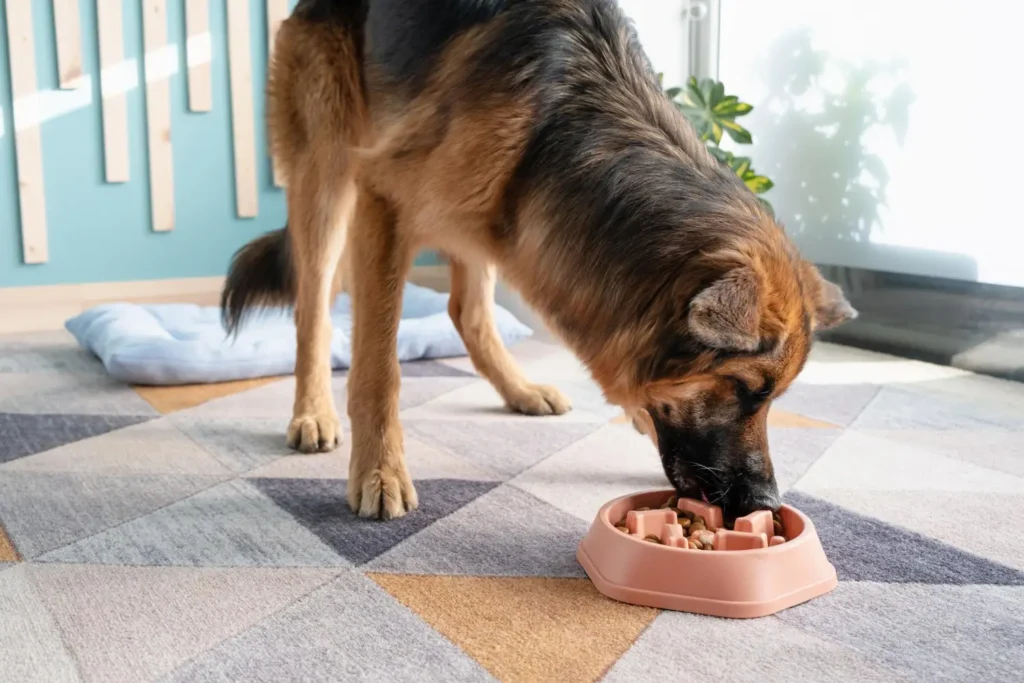
Most people grab whatever their vet sells or whatever has good reviews on Amazon. Fair enough. But knowing what to actually look for makes the decision a lot easier.
Protein
Start here. Muscle, coat, immune system — protein runs all of it. For adult GSDs you want at least 22-26% protein on a dry matter basis. Puppies need more. Around 28-30%, because everything is still being built.
The number is only part of it. Look at what the protein actually is. Chicken, beef, lamb, salmon — a real named source should be the first ingredient. “Meat meal” or “poultry by-product” at the top of the list? Keep looking.
Fat
12-16% fat for adult GSDs is a solid range. Fat is where skin and coat health comes from. Omega-3 and omega-6 fatty acids specifically. Fish oil is one of the better sources.
Dull coat, more shedding than usual and it is not coat blow season — check what your dog is eating before you blame anything else. Diet shows up in the coat fast.
Carbohydrates
Dogs do not need carbs the way humans do, but they provide energy and fiber, and fiber matters for a breed known for sensitive stomachs. Whole grains, sweet potato, brown rice — these tend to digest well. Corn, wheat, soy — not so much for dogs that react to things.
Grain-free food has been trendy for years. Worth knowing: the FDA looked into a possible link between grain-free diets heavy in legumes (peas, lentils, chickpeas) and dilated cardiomyopathy in dogs. Still being studied, but worth factoring in.
Glucosamine and Chondroitin
Hip and elbow dysplasia run in this breed. Glucosamine and chondroitin protect joint cartilage and slow things down if problems start developing. A lot of large-breed formulas include them. If yours does not, it is an easy supplement to add, and more important the older your dog gets.
Calcium and Phosphorus
Mostly a puppy concern. Too much calcium during rapid growth actually causes skeletal problems in large breeds — the opposite of what you would expect. Large-breed puppy food manages these levels deliberately. Generic puppy food does not. That is the main reason the distinction matters.
How Much to Feed a German Shepherd
Age, weight, activity level. Those three things determine the amount. The table below gives general figures for dry kibble. Every brand has different caloric density, so use this as a starting point and check what is on the bag.
Dog Feeding Guidelines
| Life Stage | Weight | Daily Amount (approx.) | Meals Per Day |
|---|---|---|---|
| Puppy (2-4 mo) | 5-20 lbs | 1 – 1.5 cups | 3-4 |
| Puppy (4-6 mo) | 20-40 lbs | 2 – 2.5 cups | 3 |
| Puppy (6-12 mo) | 40-65 lbs | 2.5 – 3.5 cups | 2-3 |
| Adult (1-7 yr) | 50-90 lbs | 2.5 – 3.5 cups | 2 |
| Senior (7+ yr) | 50-90 lbs | 2 – 3 cups | 2 |
These are starting points. A dog that trains, works, or runs hard needs more than the chart says. A less active dog needs less. The simplest check: run your hands along their sides. You should feel the ribs without pressing. If you cannot, they are eating too much.
According to AKC nutrition guidelines, overfeeding is one of the most common mistakes owners make with large breeds. Extra weight hits the joints fast on a dog this size.
German Shepherd Feeding Guide by Life Stage
Puppies (8 Weeks to 12 Months)
GSD puppies grow fast, but not evenly. Too many calories too early causes growth spurts that stress the joints and bones before they are ready for it. Large-breed puppy food exists specifically to manage this — it controls calorie density and calcium so growth stays steady rather than sudden.
Three to four meals a day up to about four months, then drop to two or three. Do not free-feed. Put the food down, give them 15-20 minutes, then pick it up. Tracks appetite, builds routine, and a dog that suddenly stops eating is telling you something.
VCA Animal Hospitals recommends keeping large breed puppies on puppy formula until 18-24 months. Longer than most people expect, but GSDs take longer to finish growing than smaller breeds.
Adults (1 to 7 Years)
Two meals a day, morning and evening. One large meal is not a good idea for this breed. German Shepherds are deep-chested, and bloat (gastric dilatation-volvulus) is a real risk. Eating a large meal fast and then exercising is one of the known triggers. Split the portions, and do not exercise right after feeding.
Activity level drives everything here. A working dog or one doing serious daily training needs significantly more food than a dog with a moderate routine. Go by body condition, not just the bag.
Seniors (7 Years and Older)
Metabolism slows, activity drops, calorie needs go down. Senior formulas account for this with lower fat content and usually added glucosamine and chondroitin for the joints.
Watch for appetite changes, unexplained weight loss or gain, or difficulty chewing. Any of those things, see a vet. Smaller meals more frequently can help if digestion starts becoming an issue.
What to Look for in German Shepherd Food
You do not need to read the whole label. A few things matter:
- Named protein first: chicken, beef, lamb, salmon, turkey. Not “meat” or “poultry.”
- AAFCO “complete and balanced” statement, matched to your dog’s life stage
- Named fat source: chicken fat, salmon oil. Not just “animal fat”
- No heavy fillers at the top: corn, wheat, soy as primary ingredients is a pass for a GSD with a sensitive stomach
- Large-breed formula for puppies: manages calcium and calories for proper growth
- Glucosamine and chondroitin on the label, especially for dogs over five
Price is not a perfect indicator of quality but the cheapest options on the shelf rarely meet all of the above.
Foods to Avoid
Some human foods are genuinely dangerous for dogs. Per ASPCA animal poison control:
- Grapes and raisins: kidney failure, even in small amounts
- Onions and garlic: toxic to red blood cells, causes anemia
- Xylitol: in sugar-free gum, some peanut butters, baked goods — causes liver failure
- Chocolate: theobromine is toxic. Dark chocolate and baking chocolate worst
- Macadamia nuts: weakness, vomiting, tremors, fever
- Alcohol and caffeine: toxic in any amount
- Cooked bones: splinter, cause internal punctures
- Avocado: persin in the flesh, skin, and pit is toxic
Table scraps in general — keep them minimal. High-fat human food is a fast path to pancreatitis, which is painful and can get serious.
Raw Diet for German Shepherds: Is It Worth It?
Raw feeding has a real following in the GSD world. The idea is simple: dogs do better on something closer to what they were built to eat. Raw meat, bones, organ meat.
Some owners see genuine improvements. Better coat, more energy, smaller stools, cleaner teeth. GSDs with chronic gut issues sometimes respond well to raw, especially if they were reacting to something in their kibble.
But it is not without downsides:
- Raw meat carries Salmonella and Listeria. Risk to the dog and to whoever is handling the food
- Home-assembled raw diets are easy to get wrong nutritionally, especially the calcium/phosphorus ratio. Risky for puppies
- It costs more and takes more time than kibble
- You need freezer space
If you want to try it, commercial raw options that meet AAFCO standards are a safer starting point than building your own. Talk to your vet first, particularly if your dog has any existing health issues.
German Shepherd Food Allergies
GSDs react to food more than most breeds. It shows up as skin problems (itching, hot spots, ear infections), digestive problems (loose stools, gas, vomiting), or both at the same time.
Common culprits: beef, dairy, wheat, chicken, egg, soy. Chicken comes up a lot in GSDs, which is awkward given how many dog foods lead with it.
Identifying the problem takes time. The only method that actually works is an elimination diet: 8-12 weeks on a novel protein your dog has never eaten (venison, duck, kangaroo) and a single carb source. Nothing else. No treats, no table food. If things improve, you add ingredients back one at a time until you find what caused it.
Skip the allergy blood tests marketed for dogs. The evidence is not there. Elimination diet, done properly with your vet, is the only reliable approach.
Skin issues and diet often go hand in hand. If your GSD is scratching or getting hot spots, the grooming guide covers the skin and coat side of things, worth reading alongside this.
How Diet Connects to Overall GSD Health
Nutrition does not exist in a vacuum. It interacts with everything else: exercise level, age, genetics, stress, and environment.
A German Shepherd that eats well but does not get enough exercise will still gain weight and develop joint problems. A dog that exercises heavily on a poor diet will not recover well between sessions. The two things go together. Our guide on how much exercise a German Shepherd needs is worth reading alongside this one.
Diet is also one of the factors that affects the overall cost of owning a German Shepherd. Quality food costs more upfront but can reduce vet bills over a dog’s lifetime, especially for joint-related and digestive issues that are partly diet-driven.
-
 Select options
Blossom
$1495Meet BlossomFemale 16 WeeksOne or both of this puppy's parents have undergone genetic testing.This puppy has had early neurological stimulation exercises. -
Select options
Beverly
$1495Meet BeverlyFemale 16 WeeksOne or both of this puppy's parents have undergone genetic testing.This puppy has had early neurological stimulation exercises. -
Select options
Harlow
$1795Meet HarlowFemale 13 WeeksOne or both of this puppy's parents have undergone genetic testing.This puppy has had early neurological stimulation exercises. -
Select options
Iris
$1795Meet IrisFemale 12 WeeksOne or both of this puppy's parents have undergone genetic testing.This puppy has had early neurological stimulation exercises.




Frequently Asked Questions
What is the best food for a German Shepherd?
There is no single answer. The best food for your GSD is one that lists a named protein source first, meets AAFCO standards for complete and balanced nutrition, is appropriate for their life stage, and agrees with their digestive system. Large breed formulas are a good starting point for most adult GSDs.
How many times a day should I feed my German Shepherd?
Twice a day for adults, split into morning and evening meals. Puppies under six months do better with three meals a day. Avoid one large meal per day, especially for a deep-chested breed prone to bloat.
Can German Shepherds eat raw food?
Yes, but it requires careful planning to ensure nutritional balance. Commercial raw formulas that meet AAFCO standards are a safer entry point than home-assembled raw diets. Always consult your vet before switching, especially for puppies.
Why does my German Shepherd have a sensitive stomach?
GSD digestive sensitivity is common and often linked to food ingredients rather than the feeding schedule. Grains like corn and wheat, certain proteins like chicken, and high-fat foods are frequent culprits. If sensitivity is ongoing, work with your vet on an elimination diet to identify the trigger.
Should I feed my German Shepherd puppy adult food?
No. Puppy food formulated for large breeds controls calcium and calorie levels specifically for proper skeletal development. Switching to adult food too early, or feeding a generic (not large-breed) puppy food, can contribute to joint problems during the growth phase.
How do I know if my German Shepherd is a healthy weight?
Run your hands along their sides. You should be able to feel the ribs with light pressure without pressing hard. From above, there should be a visible waist. From the side, a slight abdominal tuck. If you cannot feel the ribs without pressing or there is no visible waist, your dog is likely overweight.
What human foods can German Shepherds eat?
Some human foods are safe in small amounts: plain cooked chicken, rice, carrots, blueberries, plain cooked sweet potato. These can work as treats or food toppers. Avoid anything on the toxic list above, and keep all human food a small portion of the overall diet.
