
German Shepherd Hip Dysplasia: Symptoms, Treatment & Prevention
Hip dysplasia is the most common health problem related to German Shepherds. The breed has one of the highest rates of the condition among all other dog breeds. According to data from the Orthopedic Foundation for Animals (OFA), around 20% of German Shepherds tested show some level of hip dysplasia.
If you share life with a German Shepherd, are considering getting one, or are watching your current dog move a little differently than they used to, this is a topic worth understanding. Not because hip dysplasia is a death sentence, but because knowing what it is, how to spot it, and what your options are makes a real difference in outcomes.
What Is Hip Dysplasia in German Shepherds?
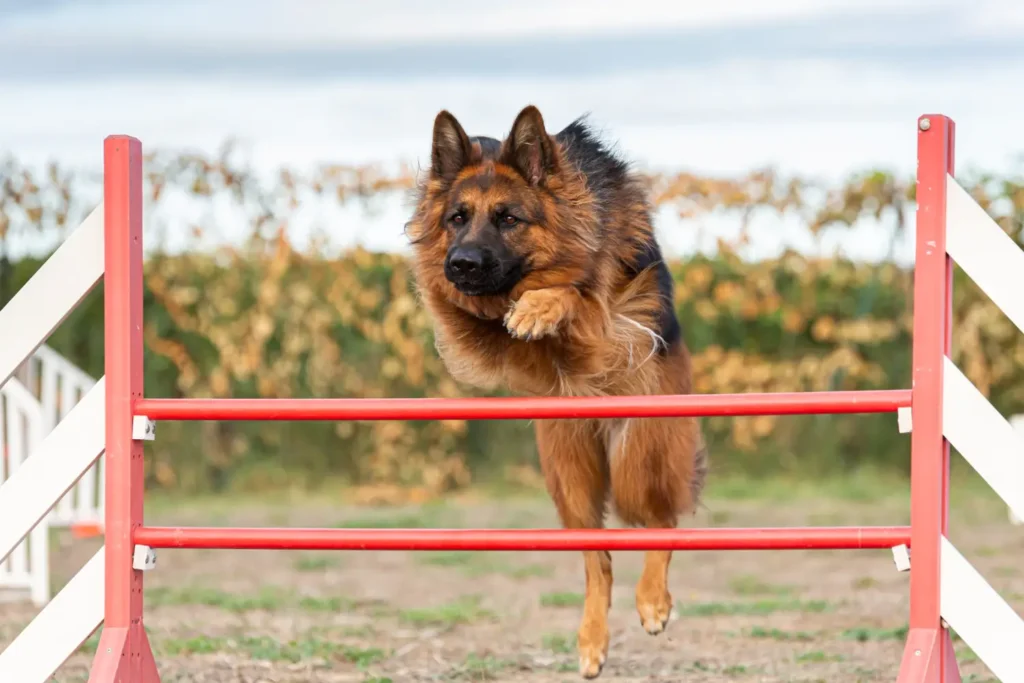
Hip dysplasia is a developmental condition where the hip joint does not form correctly. The hip is a ball-and-socket joint: the head of the femur (the ball) should fit snugly into the acetabulum (the socket) in the pelvis. When dysplasia is present, this fit is loose, shallow, or malformed.
Over time, this incorrect fit creates trouble. The joint wears unevenly. The body responds by producing extra bone in an attempt to stabilize the joint, which leads to another health problem: osteoarthritis.
This is a progressive process: which also worsens with age, though the rate of progression varies considerably between dogs.
The condition is primarily genetic, but it is not entirely predetermined. Environmental factors such as diet, weight, and exercise during the growth phase influence whether and how severely the condition develops in a dog that is genetically predisposed.
Why Are German Shepherds So Prone to Hip Problems?
Several factors combine to make hip dysplasia in German Shepherds more common than in many other breeds.
Genetics
Hip dysplasia has a strong hereditary component in the GSD. It is a polygenic trait, meaning multiple genes are involved, which makes it harder to eliminate through selective breeding than a single-gene condition. A dog can carry genes that predispose it to dysplasia even if its own hips are normal. This is why health testing parents is necessary but not a guarantee that every puppy will be unaffected.
Body structure
The German Shepherd’s characteristic angulated hindquarters, particularly in show line dogs, places different mechanical stresses on the hip joint compared to breeds with a straighter rear. Working line dogs generally have a straighter back and less rear angulation, which is one reason DDR and Czech lines are sometimes associated with better hip health than show line dogs. The relationship between structure and hip health is real, though it is not the only factor.
Size and growth rate
German Shepherds are large dogs that grow quickly. Rapid growth in large breeds creates windows of vulnerability during skeletal development when joints can be stressed before they are fully formed. Overfeeding puppies during the growth phase accelerates this problem. Weight management in the first year of life matters more than many owners realize.
The differences between show line and working line dogs in terms of structure and hip health are worth understanding. There is more detail on this in our breakdown of German Shepherd types.
Signs of Hip Dysplasia in German Shepherds
German shepherd hip dysplasia symptoms can appear at different life stages, and they do not always look the same at 6 months versus 6 years.
In puppies and young dogs (under 18 months)
Early onset hip dysplasia can show up sooner than most owners expect. Signs to watch for:
- Bunny hopping when running, using both back legs together rather than alternating
- Reluctance to climb stairs, jump, or get up from lying down
- Decreased activity or tiring quickly during play
- Swaying gait in the rear end
- Visible discomfort when the hips are touched or manipulated
- Sitting in an unusual position with one or both legs splayed out
These signs can be subtle in a young dog. Puppies are generally high-energy and stoic about discomfort, which means mild hip dysplasia in a German Shepherd puppy sometimes gets mistaken for normal puppy awkwardness. If something looks off in how your dog moves, trust that instinct.
In adult and senior dogs
As the condition progresses and arthritis develops, the signs tend to become more obvious:
- Stiffness after rest, particularly first thing in the morning or after lying down for a while
- Visible pain or slowness when rising
- Reduced range of motion in the back legs
- Muscle loss in the hindquarters as the dog shifts weight to compensate
- Reluctance to exercise, play, or engage in activities the dog previously enjoyed
- A clicking or grinding sound from the hip joint in some cases
German shepherd hip pain often becomes most noticeable in cold or damp weather, after heavy exercise, or in dogs that are overweight. The progression is not linear: some dogs have good days and bad days, which can make it harder to assess the actual state of the joint.
Diagnosis: What the Vet Will Do
If you suspect hip dysplasia, your vet will start with a physical examination. They will assess your dog’s gait, check for pain on manipulation of the hip joint, look for muscle asymmetry in the rear, and perform specific orthopedic tests like the Ortolani sign (checking for hip laxity).
Confirmation comes from imaging. The two main methods used in dogs are:
OFA evaluation
The standard hip extended view radiograph, evaluated by three board-certified radiologists through the OFA. Dogs must be at least 24 months old for a final OFA certification, though preliminary evaluations can be done earlier. Results are graded as Excellent, Good, Fair (all normal), Borderline, Mild, Moderate, or Severe. Only the normal grades receive an OFA number that breeders can reference.
PennHIP
A more sensitive method that can detect hip laxity as early as 16 weeks of age. PennHIP uses a distraction index to measure how loose the hip joint is and compares the result against a breed-specific database. It is better at predicting future arthritis development than the OFA method for some dogs, though it requires a certified practitioner.
For dogs showing symptoms earlier in life, your vet may want to take radiographs before the formal certification age to assess the current state of the joint and guide management decisions.
German Shepherd Hip Dysplasia Treatment Options
German shepherd hip dysplasia treatment depends on the dog’s age, the severity of the condition, the dog’s overall health, and how significantly the hip problems are affecting quality of life. There is no cure for hip dysplasia: the goal is managing pain, slowing progression, and maintaining function.
Conservative management
For mild to moderate cases, or as a long-term approach for dogs that are not surgical candidates, conservative management covers a range of interventions:
- Weight management: Every extra pound of body weight adds significant stress to already compromised joints. Keeping a GSD with hip dysplasia lean is one of the single most impactful things an owner can do. Weight management by age is covered in depth in our German Shepherd weight chart.
- Exercise modification: Low-impact activity like swimming and leash walking maintains muscle mass and joint mobility without the impact stress of running or jumping. Consistent moderate exercise is generally better than alternating intense activity with long rest periods. How much exercise a GSD needs changes significantly when hip dysplasia is in the picture.
- Pain medication: NSAIDs (non-steroidal anti-inflammatory drugs) are commonly prescribed to manage pain and inflammation. Your vet will determine appropriate medications and dosing based on your dog’s specific situation.
- Joint supplements: Glucosamine, chondroitin, fish oil, and other supplements are widely used, with varying degrees of evidence. They are generally safe and may provide some benefit, particularly in mild cases or as part of a broader management plan.
- Physical therapy and hydrotherapy: Increasingly available through veterinary rehabilitation specialists. Can meaningfully improve strength, mobility, and comfort in dogs with hip dysplasia.
Surgical options
Surgery is considered when conservative management is not controlling pain adequately or when the dog’s quality of life is significantly compromised. Several procedures exist:
- Total hip replacement (THR): The most effective surgical option for dogs with severe hip dysplasia and significant arthritis. Both the ball and socket are replaced with prosthetic components. Most dogs experience substantial improvement. Cost typically ranges from $3,500 to $7,000 per hip.
- Femoral head and neck excision (FHO): The femoral head is removed entirely, and the body forms a false joint from scar tissue. Less expensive than THR and appropriate for smaller or less active dogs. Recovery is longer and results are generally not as complete as THR.
- Double or triple pelvic osteotomy (DPO/TPO): A preventive surgery for young dogs (typically under 10 months) with hip laxity before significant arthritis has developed. The pelvis is cut and repositioned to improve socket coverage of the femoral head. Only appropriate in early-stage cases.
Surgical decisions should be made in close consultation with a veterinary orthopedic specialist. The right procedure depends heavily on the individual dog’s situation.
German Shepherd Hip Dysplasia Life Expectancy
This is the question that worries owners most, and the honest answer is reassuring: hip dysplasia in German Shepherds does not significantly shorten life expectancy on its own.
The German Shepherd’s average lifespan is 9 to 13 years. A GSD with hip dysplasia, managed appropriately, can live a full lifespan within that range. What hip dysplasia affects is quality of life and mobility..
Dogs with mild to moderate dysplasia that is well managed, with appropriate weight, exercise, pain control, and veterinary monitoring, often maintain good quality of life well into their senior years. Dogs with severe dysplasia that goes unmanaged, or that are allowed to become significantly overweight, tend to have a harder time.
The honest caveat: severe hip dysplasia combined with complications, significant pain that cannot be adequately controlled, or progressive neurological involvement can affect quality of life to the point where owners and vets have to make difficult decisions. But this represents the more extreme end of the spectrum. Many dogs with hip dysplasia do well for years with appropriate care.
Preventing Hip Dysplasia in German Shepherds
Hip dysplasia cannot be completely prevented in a breed with this level of genetic predisposition. But the risk can be meaningfully reduced, and the severity of the condition in dogs that do develop it can often be mitigated.
Start with the breeder
This is the single most impactful step available before a puppy is even born. A breeder who OFA health tests both parents and only breeds dogs with Good or Excellent hip scores is actively reducing the probability that their puppies will develop hip dysplasia. It does not eliminate the risk entirely, but it meaningfully reduces it compared to breeding untested dogs.
Ask any breeder you talk to for the OFA numbers of both parents. Look them up yourself at ofa.org. A breeder who cannot provide these or who gives vague assurances about “excellent bloodlines” without documentation is not prioritizing this issue. What to look for in a German Shepherd breeder covers this in more detail.
Control growth rate in puppies
Overfeeding a GSD puppy to make them grow faster or appear bigger is one of the most consistent ways to increase hip dysplasia risk. Large breed puppies should grow at a steady, moderate pace on a diet formulated for large breed puppies. Avoid free feeding, limit high-calorie supplementation, and keep the puppy lean rather than chunky during the first year of life.
Manage exercise during the growth phase
High-impact exercise on hard surfaces, repetitive jumping, and forced running with puppies under 12 to 18 months can stress developing joints. This does not mean puppies should not play or run. It means sustained high-impact activity should be limited until the skeleton is mature. Free play on soft surfaces is generally fine. Running long distances on pavement is not.
Maintain a healthy weight throughout life
Weight is one of the few modifiable risk factors for hip dysplasia progression. A dog that is overweight puts significantly more stress on its joints. Keeping your GSD lean throughout its life reduces the rate at which any existing dysplasia progresses. Healthy weight ranges by age give you a concrete reference point.
Consider timing of spay and neuter
Research suggests that early spay and neuter in large breeds may increase the risk of hip dysplasia and other joint conditions. The growth plates remain open longer in dogs that are neutered before sexual maturity, which may affect how the skeleton develops. When to spay or neuter a German Shepherd is worth reading before making that decision.
Health Testing at Shepherd Kingdom
At Shepherd Kingdom, every dog in our breeding program is OFA health tested before they produce a litter. We do not breed dogs with borderline or dysplastic hip scores, and we provide documentation for every parent dog in every litter we place.
We are not going to tell you that buying from us guarantees your puppy will never develop hip dysplasia. No breeder can make that guarantee and be telling you the truth. What we can tell you is that we take it seriously, we health test, and we back every puppy we place with a 2-year genetic health guarantee.
If you have questions about our health testing protocols or want to know about upcoming litters, reach out directly.
And if you want to see our current available puppies, that is here.
Frequently Asked Questions
Do German Shepherds get hip dysplasia?
Yes, at higher rates than most breeds. OFA data shows roughly 20% of tested German Shepherds have some degree of hip dysplasia. It is the most commonly discussed health issue in the breed and a significant reason why health testing breeding dogs is so important.
What are the signs of hip dysplasia in a German Shepherd?
In younger dogs: bunny hopping when running, reluctance to jump or climb stairs, swaying rear gait, and unusual sitting positions. In older dogs: stiffness after rest, difficulty rising, muscle loss in the hindquarters, reduced activity tolerance, and visible pain when moving. Signs vary significantly by severity.
At what age does hip dysplasia show up in German Shepherds?
It can appear at any age. Early onset hip dysplasia can show up in puppies as young as 4 to 6 months. More commonly, signs become noticeable between 1 and 2 years as the dog grows and the joint stress increases. In dogs with milder dysplasia, arthritis-related symptoms may not become obvious until middle age or later.
Can German Shepherd hip dysplasia be treated?
It can be managed but not cured. Treatment ranges from conservative approaches like weight management, exercise modification, and pain medication to surgical interventions like total hip replacement for severe cases. Most dogs with mild to moderate dysplasia do well with conservative management.
What is the life expectancy of a German Shepherd with hip dysplasia?
Hip dysplasia does not significantly shorten life expectancy on its own. A German Shepherd with well-managed hip dysplasia can live a full lifespan of 9 to 13 years. What the condition affects is mobility and quality of life, which is why early diagnosis and appropriate management matter so much.
How can I prevent hip dysplasia in my German Shepherd?
You cannot eliminate the risk entirely in a genetically predisposed breed, but you can reduce it. Start with a breeder who OFA health tests both parents. Keep your puppy lean and avoid high-impact exercise during the growth phase. Maintain a healthy weight throughout the dog’s life. Consider the timing of spay and neuter. These steps do not guarantee your dog will be unaffected, but they meaningfully change the odds.
Is hip dysplasia more common in show line or working line German Shepherds?
The data is not definitive, but working line dogs, particularly DDR and Czech lines, are generally considered to have better hip health than show line dogs. This is partly because DDR breeding programs historically placed heavy emphasis on structural soundness, and partly because the more extreme rear angulation of some show line dogs creates additional mechanical stress on the hip joint. That said, hip dysplasia occurs in all lines and health testing remains important regardless.
