
German Shepherd Shedding: What to Expect and How to Manage It
Do German Shepherds Shed?
Yes. Consistently. German Shepherds are one of the heavier-shedding breeds, and they earn that reputation year after year in owners’ homes and on their furniture, clothes, and car seats.
The breed even has a nickname in GSD circles: the “German Shedder.” That should tell you something. This is not a breed that has occasional shedding. It is a breed where shedding is essentially a permanent background condition, with two significant surges per year when it becomes something else entirely.
The trade-off, for most GSD owners, is worth it. The loyalty, intelligence, and bond you get from this breed tend to overwhelm the inconvenience of fur on everything. But going in with realistic expectations matters.
Why Do German Shepherds Shed So Much? The Double Coat Explained
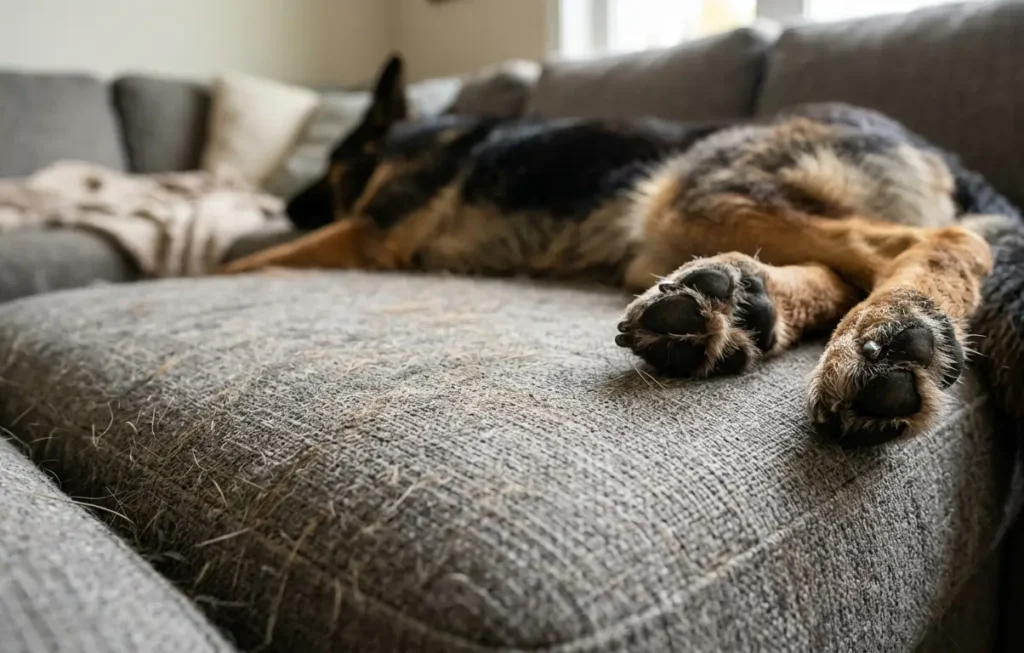
The German Shepherd double coat is the root cause of everything. These dogs have two distinct layers of fur, and both shed.
The outer coat, sometimes called the guard coat, is made up of longer, coarser hairs. These are the ones you see most easily on dark clothing. The undercoat sits beneath it and is dense, soft, and woolly. Its job is insulation: keeping the dog warm in cold weather and, counterintuitively, helping regulate body temperature in heat as well.
Both layers shed throughout the year at a baseline level. Twice a year, typically in spring and autumn, the dog “blows” its coat. During this period the undercoat sheds massively to make way for the new seasonal coat. If you have not seen a GSD blow its coat, prepare yourself. Clumps of fur come out in handfuls. The floor looks like it snowed inside. It lasts several weeks.
The coat type also matters. Short-coated GSDs and long-coated GSDs shed differently. Long coats tend to mat more and require more active grooming, but the fur is sometimes easier to collect because it clumps rather than floating onto every surface in the house. German Shepherd coat lengths breaks down the differences between coat types if you want more detail on that.
When Do German Shepherds Shed? Seasonal Shedding Explained
German shepherd shedding follows a seasonal pattern, though year-round shedding is the baseline between the major blows.
Year-round shedding
Even outside the shedding seasons, you will find GSD fur on your floors, furniture, and clothes on a daily basis. This is normal. The outer coat sheds individual hairs continuously, and if you have a GSD you will simply accept that a lint roller is now a permanent fixture in your life.
Spring shedding season
The bigger of the two annual coat blows typically happens in spring. As temperatures rise and daylight increases, the dog sheds its heavy winter undercoat. This is when the dramatic clumps of fur appear. Daily brushing during this period is not optional if you want to keep the situation manageable. Some owners have their dog professionally groomed or bathed and blown out during peak shed to accelerate the process.
Autumn shedding season
A second, usually less dramatic, coat blow happens in autumn as the dog sheds its lighter summer coat and grows in the denser winter undercoat. For many GSDs this seasonal blow is milder than the spring one, though individual dogs vary.
Some GSDs shed heavily year-round without a clear seasonal distinction, particularly dogs kept indoors where temperature and light exposure are more consistent. Indoor dogs that are not exposed to natural seasonal light cycles sometimes shed more evenly rather than in concentrated bursts. This is generally more annoying on a daily basis but less of a dramatic event twice a year.
How Much Do German Shepherds Shed Compared to Other Breeds?

German Shepherds sit at the heavy end of the shedding spectrum, alongside breeds like the Siberian Husky, Alaskan Malamute, and Labrador Retriever. If you have lived with a light-shedding breed before, the adjustment can be significant.
Compared to low-shedding breeds like Poodles or Portuguese Water Dogs, the difference is not subtle. Those breeds shed minimally and their coats often need professional cutting. A GSD sheds constantly and requires regular deshedding rather than cutting.
Within the GSD world, some variation exists. Dogs from working lines, particularly those with shorter, coarser coats, may shed slightly less dramatically than show line dogs with longer, denser coats. Long-coated GSDs can appear to shed more because the fur is more visible, though the actual volume may be similar. Neither variation is a low-shedding dog.
How to Reduce German Shepherd Shedding: What Actually Works
You cannot stop a GSD from shedding. You can manage how much of that shed ends up loose in your house versus removed during grooming. Here is what makes a real difference.
Brush regularly, not just during shedding season
This is the single most impactful thing you can do. Brushing two to three times a week during normal periods removes loose fur before it ends up on your floor. During the seasonal coat blow, daily brushing is worth the time investment. The fur you remove with a brush is fur that is not floating around your living room.
The tool matters. A slicker brush works well for the outer coat. An undercoat rake or deshedding tool is what actually gets into the dense underlayer where most of the loose fur accumulates. Many owners use both in sequence, starting with the undercoat rake and finishing with the slicker brush.
Bathe and blow out during peak shedding
A bath followed by thorough drying with a high-velocity dryer is one of the fastest ways to accelerate the coat blow. The water loosens the dead undercoat and the dryer literally blows it out. Professional groomers offer this service specifically for heavy-shedding breeds and it can remove an extraordinary amount of fur in a single session.
Regular bathing outside of peak shedding helps too, though every four to six weeks is usually sufficient. Over-bathing strips natural oils from the coat and skin, which can actually increase shedding over time.
Diet and nutrition
A poor diet shows up in a GSD’s coat faster than most owners expect. Dull, dry fur that sheds excessively is often a sign that the dog is not getting adequate nutrients, particularly omega-3 fatty acids. Fish oil supplementation is widely used by GSD owners and has a reasonable evidence base for supporting coat health. The quality of the base diet matters too. A high-quality protein-forward food tends to produce a healthier coat than a cheap kibble heavy in fillers.
Keep the dog healthy overall
Stress, illness, hormonal changes, and certain health conditions all affect shedding. A dog that is suddenly shedding dramatically more than usual, or losing hair in patches, may have something going on beyond normal seasonal variation. The health section below covers this in more detail.
Weight also plays a role in a way most people do not connect: overweight dogs tend to exercise less, have poorer skin circulation, and often have less optimal nutrition despite eating more. Keeping your GSD at a healthy weight supports coat health alongside everything else. German Shepherd weight by age gives you concrete reference points.
Best Tools for Managing GSD Shedding
You do not need to spend a lot of money on this. A few well-chosen tools do most of the work.
Undercoat rake
The most important tool for GSD grooming. An undercoat rake has longer, wider-spaced teeth that reach through the outer coat into the dense undercoat. This is where most of the loose fur lives during a shed. Use this first before any other brush.
Slicker brush
A flat brush with fine, short wire bristles. Good for finishing after the undercoat rake, smoothing the outer coat, and everyday maintenance brushing between heavy sessions.
Deshedding tool (FURminator or similar)
Polarizing in the GSD community. Deshedding tools have a fine-toothed edge that pulls out undercoat very effectively. They work well when used occasionally during peak shedding. Used too aggressively or too frequently, they can damage the outer coat. Worth having, but not for daily use.
High-velocity dryer
Not a household necessity but worth knowing about. Professional groomers use these to blow out shed undercoat after bathing. If you bathe your GSD at home and have the budget, a pet-specific high-velocity dryer speeds up coat blow season considerably.
The AKC’s German Shepherd grooming guide covers technique for each tool type if you want more guidance on how to use them correctly.
German Shepherd Hair Loss vs Normal Shedding: When to Be Concerned
Shedding and hair loss are not the same thing. This distinction matters.
Normal German shepherd shedding is distributed evenly across the body. You will see loose fur throughout the coat, clumps during seasonal blows, and steady background shedding year-round. The skin underneath looks healthy. The remaining coat looks full and consistent in texture.
German shepherd hair loss that warrants a vet visit looks different:
- Patchy or circular areas of hair loss with visible bare skin
- Hair loss concentrated in specific areas like the tail base, around the neck, or on the flanks
- Skin that looks red, inflamed, flaky, or thickened underneath the hair loss
- Excessive licking or scratching alongside the hair loss
- Sudden dramatic increase in shedding outside of seasonal timing
- Dull, brittle, or dry coat texture alongside increased shedding
Several conditions can cause abnormal hair loss in German Shepherds. Allergies are common in the breed and often show up as skin and coat problems first. Thyroid disorders can cause diffuse hair thinning. Mange, ringworm, and bacterial skin infections can cause patchy loss. Hormonal changes from intact females going through heat or pregnancy can trigger significant temporary shedding.
If your dog’s coat health has changed noticeably and you cannot attribute it to diet or stress, a vet check is worth doing. The skin is the largest organ, and problems that show up there often point to something systemic. This sits in the same category of health awareness as monitoring for hip dysplasia signs: catching things early makes a real difference.
One More Thing About GSD Ownership Costs
Grooming is one of the ongoing costs of owning a German Shepherd that people underestimate. If you plan to have your dog professionally groomed during peak shedding season, that cost adds up. Monthly ownership costs for a German Shepherd lays out what to realistically budget for, grooming included.
Ready to Find Your German Shepherd?
The shedding is real. So is everything else about this breed: the intelligence, the loyalty, the bond they form with their people. Most GSD owners would not trade that for a low-shedding dog.
At Shepherd Kingdom, we raise German Shepherd puppies in our home in Dundee, Ohio. Every puppy is AKC registered, health tested, properly socialized, and backed by a 2-year genetic health guarantee.
If you are ready to add one to your family, our available puppies are here.
If you have questions first, reach out and we will talk through what fits your situation.
Frequently Asked Questions
Do German Shepherds shed a lot?
Yes. They shed year-round at a baseline level and go through two significant seasonal shed events each year, typically in spring and autumn. The breed earned the nickname “German Shedder” for a reason. It is manageable with regular grooming but it does not go away.
When do German Shepherds shed the most?
The heaviest shedding typically happens in spring when the dog drops its winter undercoat. A second coat blow in autumn is usually less intense. Both can last several weeks. Between these peaks, shedding continues at a lower but still noticeable level year-round.
What is a German Shepherd blowing coat?
“Blowing coat” refers to the seasonal undercoat shed when a dog drops its dense undercoat all at once in preparation for the next season’s coat. In German Shepherds this is dramatic. Fur comes out in large clumps, daily brushing becomes necessary, and the volume of loose fur in the house increases significantly. It is temporary, typically lasting two to four weeks.
How do I reduce my German Shepherd’s shedding?
Regular brushing is the most effective single action. Two to three times weekly at minimum, daily during seasonal blows. An undercoat rake reaches the layer where most of the loose fur accumulates. A quality diet with adequate omega-3 fatty acids supports coat health. Bathing followed by thorough drying during peak shedding accelerates the coat blow. None of these stop the shedding, but they shift more of it to your brush session and less to your floor.
Is it normal for a German Shepherd to shed a lot in summer?
Yes. The spring coat blow happens as temperatures rise, which often means heavy shedding continues into early summer. Additionally, dogs kept primarily indoors sometimes shed more evenly throughout the year rather than in concentrated seasonal bursts. Summer shedding in a GSD is normal unless it is accompanied by patchy loss, skin irritation, or other signs that suggest something beyond normal seasonal variation.
Can German Shepherd hair loss be a sign of health problems?
It can. Normal shedding is distributed evenly and the skin underneath looks healthy. Hair loss that appears in patches, concentrates in specific areas, is accompanied by red or inflamed skin, or comes with increased itching or licking warrants a vet visit. Allergies, thyroid disorders, skin infections, and mange are among the conditions that can cause abnormal hair loss in the breed.
Do long-haired German Shepherds shed more than short-haired ones?
Not necessarily more in volume, but the shedding is often more visible because the individual hairs are longer and more noticeable on surfaces. Long-coated GSDs may also mat more during shedding season if the loose undercoat is not brushed out regularly. Both coat types require active grooming management. The differences between GSD coat types covers this in more detail.
