
Black and Red German Shepherd: The Complete Breed Guide
in you walk into a serious German Shepherd show ring, you will notice a pattern pretty fast. The dogs drawing the most attention, the ones with the richest pigment and the sharpest contrast, are almost always the same color: deep red against a jet black saddle. This is the Black and Red German Shepherd, and among show breeders it has been the gold standard of GSD coloring since forever.
Outside the show world, a lot of people are not sure exactly what makes a Black and Red different from the standard black and tan they have seen their whole lives. Or they have heard the color linked to “show line” dogs and are not quite sure what that means for them as someone just looking for a great family pet.
This guide covers the color itself, the genetics behind it, what the show line connection actually means in practical terms, and everything else worth knowing before you go for one.
Black and Red vs. Black and Tan: What Is the Difference?
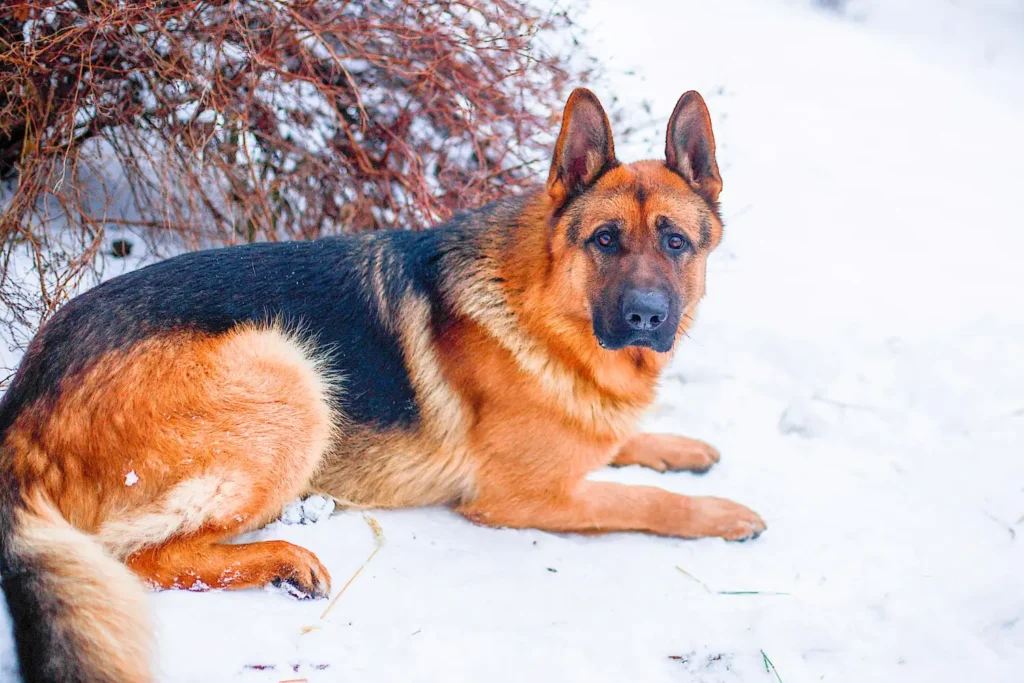
Most people can tell these two apart once they know what to look for, but at first glance they do look similar. Both have the classic dark saddle over a lighter body. The difference is in the quality and warmth of the lighter color.
On a Black and Tan GSD, the tan markings are lighter and cooler in tone. Think sandy, khaki, almost beige in some dogs. On a Black and Red, the markings are warmer and much more saturated. We are talking deep copper, mahogany, burnt sienna. In good light, a well-pigmented Black and Red almost glows.
The contrast with the black saddle and mask is also sharper on a Black and Red. The boundary between the two colors tends to be clean and high-contrast, which is a big part of what makes these dogs so visually striking. Show judges refer to rich, deep pigmentation as a mark of quality, and Black and Red dogs consistently score well on that front.
But there is one thing new owners are sometimes caught off guard: the red fades. Puppies can be born with very deep, almost mahogany red markings that gradually lighten over the first couple of years. Some dogs end up closer to tan by the time they are fully mature. It does not happen with every dog, but it is common enough that a good breeder will show you the parents so you have a realistic idea of where the color is likely to land.
Where Does the Red Color Come From?
The red in a Black and Red GSD comes from a pigment called phaeomelanin, the same pigment responsible for red and yellow tones in many breeds. How intense that red looks depends on modifier genes that control how strongly the pigment is expressed.
Here is something that surprises people: the red gene in GSDs is actually one of the least recessive of the common GSD color variants. Compare that to the solid black GSD, which needs a fully recessive gene from both parents to appear, or the Black and Silver, which is similarly recessive. According to the AKC breed standard, black and red is one of eleven recognized GSD color variations, and it shows up with reasonable consistency in show line breeding programs specifically because of this genetic accessibility.
The black saddle pattern is controlled by separate genes entirely. In Black and Red dogs, these two genetic traits — the red base and the black saddle — combine to produce that high-contrast look. If you want to go deeper on how the saddle pattern itself works, our Saddle Coat German Shepherd guide covers it in detail.
The Show Line Connection: What It Actually Means
Spend any time researching Black and Red GSDs and you will keep running into the term “show line.” Specifically, West German Show Line. This is not a coincidence. Black and Red is the signature color of that line, and the two have basically grown up together over the past several decades of breeding.
West German Show Line breeders have historically selected for rich, deep pigmentation as part of the overall conformation standard. The result is that if you want a Black and Red GSD from serious breeding stock, you are almost certainly looking at show line dogs.
For someone shopping for a family pet, the show line label matters for a few practical reasons:
- Show line GSDs tend to have a calmer, more settled temperament than working line dogs. They were bred to move beautifully in a ring, not to work all day at high intensity.
- They are usually larger and broader than working line dogs, with more angulation in the hindquarters.
- European show line breeders work under rules set by the German Shepherd Club of Germany (SV), which requires dogs to pass temperament evaluations before they can be certified for breeding. That is a meaningful safeguard.
- They are highly trainable without the kind of drive level that can overwhelm a first-time GSD owner.
None of this means a Black and Red show line GSD is a low-maintenance dog. They still need real exercise, consistent training, and plenty of engagement. But for most families, the show line temperament is a much better fit than a high-drive working dog. Our guide to German Shepherd types breaks down all the lines if you want the full picture.
Temperament

The Black and Red GSD has the same core character as any German Shepherd. Coat color does not change temperament. What does have some influence is the line, and show line dogs have a few traits worth knowing about.
These are dogs that bond hard with their people. Not casually friendly with everyone, not standoffish either. They pick their person and they take that seriously. You will have a dog that knows your routines, reads your moods, and follows you around the house not because it is anxious but because it genuinely wants to be where you are.
They are smart, sometimes inconveniently so. They pick up commands fast and they remember everything. That is great when training is going well. When it is not going well, they remember that too. Consistency matters a lot with this breed.
The protective side is real but measured in a well-raised dog. They are alert and will absolutely let you know when something is off. But a properly socialized Black and Red GSD is not reactive or aggressive. The guarding instinct is there, it is just not hair-trigger.
With kids, show line GSDs tend to do well. They are patient and affectionate with the people they know. Early socialization matters, as it does with any large dog. If you are deciding between male and female, our male vs. female GSD guide covers the real-world differences worth considering.
One thing that does not change regardless of line or color: German Shepherds need a job. Not necessarily a formal working role, but something. Daily training sessions, a sport, a routine they can sink into. A GSD with nothing to do will find its own entertainment, and you probably will not enjoy it.
Care and Health
Exercise
These dogs need at least an hour of real exercise per day, ideally two. And “real” is doing a lot of work in that sentence. A slow neighborhood walk does not cut it. Fetch sessions, off-leash running, hiking, swimming, agility work. Activities where the dog is actually moving with purpose.
Mental exercise counts just as much. Training sessions, scent games, puzzle feeders. A GSD that is mentally tired is a calm GSD. A bored one is a problem. Our guide on how much exercise a German Shepherd needs goes into specific recommendations if you want a proper breakdown.
Grooming
Black and Red GSDs shed. A lot. Twice a year during the seasonal coat blows you will wonder where all the fur is coming from. Brushing two to three times a week keeps it manageable during normal periods. During shedding season, daily is better. An undercoat rake or slicker brush will do more work than a basic brush.
The black portions of the coat show dust and debris more than the red areas, so the dog can look dirty faster than you would expect. A bath every six to eight weeks, plus regular nail trims and ear checks, rounds out the routine. If your dog has a long coat, the needs are slightly different. Our guide to GSD coat types and care covers both.
Health
Black and Red German Shepherds share the same health profile as the breed overall. A few things are worth knowing specifically if you are looking at show line dogs:
- Hip and elbow dysplasia: The most common hereditary issue in GSDs, and show line dogs can be more susceptible due to their more angulated rear structure. The Orthopedic Foundation for Animals (OFA) puts the rate at roughly 20% of German Shepherds. Ask any breeder you talk to for OFA certifications on both parents. If they cannot provide them, that is your answer.
- Degenerative myelopathy: A progressive neurological condition that can develop in older GSDs. DNA testing can identify carriers before breeding.
- Bloat (GDV): Serious and potentially fatal in deep-chested breeds. Feeding smaller meals and keeping the dog calm after eating reduces the risk.
- Exocrine pancreatic insufficiency (EPI): More common in GSDs than most other breeds. The MSD Veterinary Manual identifies pancreatic acinar atrophy as the primary cause in German Shepherds specifically. Signs to watch for are weight loss despite eating well and large volumes of pale, loose stools.
If you are thinking about spaying or neutering, timing matters more in large breeds than most people realize. Our guide on spaying and neutering GSDs explains why.
And before you commit to getting a GSD, it is worth having a clear picture of what ownership actually costs month to month. Our breakdown of German Shepherd monthly costs gives you real numbers.
What Do They Cost?

Black and Red dogs from legitimate show line breeders sit at the higher end of GSD pricing. You are generally looking at $1,500 to $3,500 or more, depending on the bloodlines, whether the parents have titles or breed survey certifications, and the breeder’s overall program.
The color itself should not be driving that price. A Black and Red puppy from a breeder who skips health testing and cannot show you a pedigree is not worth a premium, regardless of how good the coat looks. What you are actually paying for in a well-bred dog is the health testing, the genetics, the socialization work done in those first weeks, and the breeder’s knowledge of the line.
Read our guide to finding a good German Shepherd breeder before you start making calls. It will help you ask the right questions and spot the shortcuts fast.
How Does the Black and Red Compare to Other GSD Colors?
If you are still deciding on color, here is a quick look at the main alternatives. Temperament is the same across all of them.
- Black and Tan: The most common GSD pattern. Lighter, cooler tan versus the warmer, deeper red.
- Black and Silver: Cool silver markings instead of tan or red. Less common and quite striking in its own way.
- Solid Black: The rarest standard color, produced by a fully recessive gene. A completely different look.
- Sable: Multi-tonal, often described as the closest to the original GSD appearance.
For a full overview of all GSD types and lines, our guide to German Shepherd types is the place to start.
Finding One
The Black and Red color is not particularly rare from a genetic standpoint, but finding a dog from a breeding program you can actually trust takes more work than just searching for the color online.
A few things to look for when you are talking to breeders:
- OFA health certifications for both parents: Hips and elbows minimum. No certifications, no deal.
- Documented pedigree: Show line Black and Red dogs typically have European bloodlines. A breeder who cannot show you this is probably not producing real show line dogs.
- Breed survey or Körung results: West German show line breeders working under SV rules put their dogs through formal structure and temperament evaluations. Ask if the parents have been through this.
- Home-raised puppies: Puppies raised in a home environment from day one are better adjusted than kennel-raised dogs. Ask where the litter is being raised.
- A real health guarantee: Multi-year genetic health coverage. If a breeder cannot offer this, ask why.
Take the time to find the right breeder. A dog you will live with for twelve or more years is worth the patience.
-
 Select options
Blossom
$1495Meet BlossomFemale 16 WeeksOne or both of this puppy's parents have undergone genetic testing.This puppy has had early neurological stimulation exercises. -
Select options
Beverly
$1495Meet BeverlyFemale 16 WeeksOne or both of this puppy's parents have undergone genetic testing.This puppy has had early neurological stimulation exercises. -
Select options
Harlow
$1795Meet HarlowFemale 13 WeeksOne or both of this puppy's parents have undergone genetic testing.This puppy has had early neurological stimulation exercises. -
Select options
Iris
$1795Meet IrisFemale 13 WeeksOne or both of this puppy's parents have undergone genetic testing.This puppy has had early neurological stimulation exercises.




Frequently Asked Questions
Is a Black and Red German Shepherd the same as a Black and Tan?
No. Both have a black saddle over lighter markings, but the similarity stops there. Black and Tan dogs have cooler, lighter tan markings. Black and Red dogs have warmer, deeper red tones that are noticeably more saturated. In person, the difference is obvious.
Will the red color fade over time?
It can, yes. Many Black and Red GSDs are born with very rich red markings that gradually lighten as the dog matures, sometimes shifting toward a more tan-adjacent shade by adulthood. Normal coat development, no effect on health or temperament. If deep red coloring matters to you, look at the parents before committing to a puppy.
Are Black and Red German Shepherds always show line dogs?
Not always, but the association is very strong. Black and Red is the dominant color of the West German Show Line, and most dogs with this coloring come from show line or show-influenced breeding. Working line dogs are typically sable, black, or bi-color. If someone is advertising Black and Red dogs as working line, that is worth a few extra questions.
Are they good with families and kids?
Show line GSDs generally do well in family settings. They are calmer and more settled than working line dogs, patient with children they know, and affectionate with their people. Early socialization matters, same as with any large dog.
How do I verify a Black and Red GSD is purebred?
AKC registration papers and a documented pedigree are the most reliable proof. Beyond paperwork, a purebred GSD should show the characteristic structure: erect ears, strong athletic build, correct proportions. A reputable breeder provides papers as standard.
Are they hard to find?
Not particularly. The red gene is less recessive than some other GSD color variants, so show line breeders working with this color can produce it with reasonable consistency. The harder part is finding a breeder whose program is genuinely solid, not just finding the color itself. That takes more research.
