
The Black and Silver German Shepherd: Unpacking the Rare, Wolf-Like Coat and Genetics
Rare, a little controversial, and somehow more wolf than dog, here’s what nobody tells you about the silver coat before you fall completely in love with it.
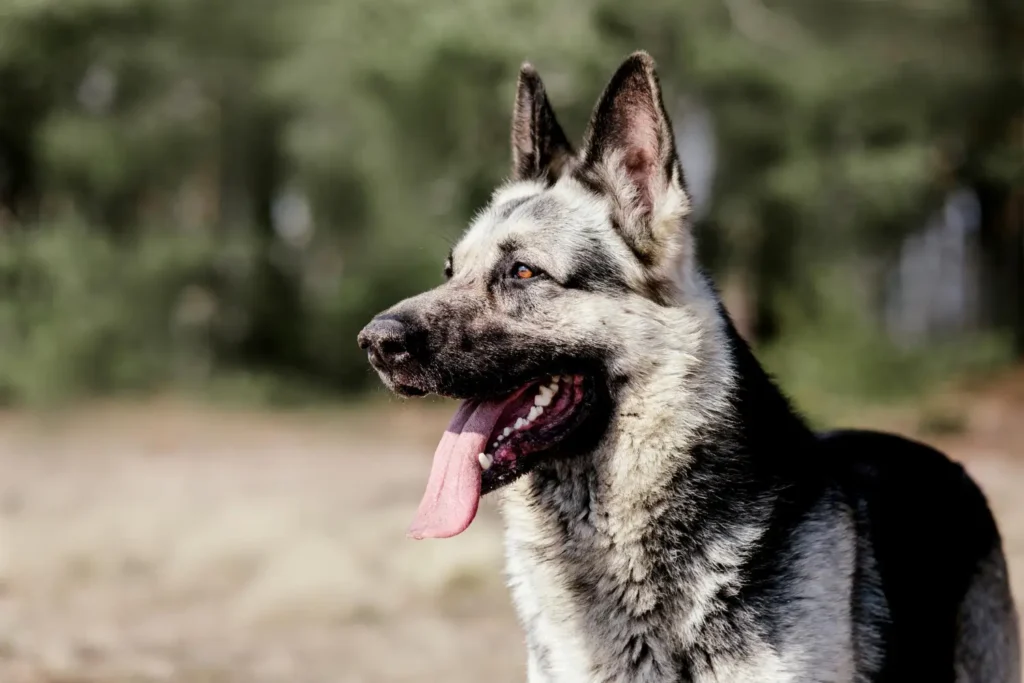
The first time most people see a black and silver German Shepherd, they assume it’s something exotic. A wolf hybrid, maybe. A breed they haven’t heard of. Something you’d find in a nature documentary rather than a backyard in Ohio.
It’s not. It’s a purebred German Shepherd, same brain, same heart, same absolute conviction that it belongs on your couch, wearing a coat that looks like it was designed by someone who studies frost patterns for a living. Black saddle across the back, silver-grey markings where other Shepherds run tan or red. The contrast is sharp. In certain light, it genuinely stops people mid-sentence.
At Shepherd Kingdom, we get questions about this color variation constantly. People want to know if it’s real, if it’s healthy, if it’s worth the search. The answer to all three is yes, but the full story is more interesting than that, and worth knowing before you start calling breeders.
Where the Silver Comes From
Here’s the thing about silver on a German Shepherd: it isn’t technically silver. The color you’re seeing is what happens when the genes that normally produce rich tan or red tones get dialed way back, muted by recessive modifiers until the warm pigment nearly disappears, leaving something cool, pale, and luminous in its place.
Scientists trace this to the Agouti gene series, the same series responsible for sable coats, wolf-grey, and that blue-tinged winter-sky tone you see in Nordic breeds like the Keeshond and Norwegian Elkhound. When an agouti allele combines with strong red-pigment dilution, the warm tones wash out. What’s left reads as silver-grey to the human eye, even though the dog’s genetics never technically produced a “silver” pigment at all.
“The silver you’re seeing is what happens when warmth is subtracted from the coat entirely, not a new color, but the absence of an old one.”
To understand where this color fits within the full genetic landscape of the breed, our breakdown of the different types of German Shepherds is a good starting point, because bloodline and working type shape coat expression just as much as individual genes do.
What a Black and Silver German Shepherd Looks Like

The pattern follows the classic German Shepherd saddle structure. Black across the back and upper sides, crisp, dark, defined. But where you’d expect that warm golden-tan on the chest, legs, eyebrows, and muzzle, a black and silver dog delivers something quieter. Cooler. A pale grey that in bright sunlight can look almost white, and in shadow deepens to the color of old pewter.
The contrast is genuinely striking. Black is one of the richest, most saturated colors in a dog’s palette. Silver-grey is one of the palest. Put them next to each other on a dog with the German Shepherd’s natural athleticism and that big, alert, upright-eared silhouette, and the result looks less like a pet and more like something carved.
The face is where most people really stop and stare. The silver eyebrow markings give black and silver Shepherds an expression of almost theatrical intensity, eyebrows that could communicate entire paragraphs without the dog moving a muscle. Add the typically dark eyes, the black mask, and those forward-facing ears, and you get a face that photographs like it was professionally lit.
Worth knowing
The silver markings on a black and silver Shepherd are not uniform. Some dogs run pale cream-silver; others have markings so light they read nearly white in photographs. Both are correct. The depth of silver depends on which specific recessive modifiers the dog inherited, and you often won’t know the final tone until around 18 months of age.
This is also, incidentally, why these dogs photograph so dramatically. The silver picks up light in a way that tan or red simply doesn’t. A black and silver Shepherd in an open field on an overcast day looks like a black-and-white photograph that somehow stayed three-dimensional. Dog photographers love them. Instagram accounts dedicated to single dogs have been built on less.
The AKC Situation, and Why It Shouldn’t Scare You Off
Let’s address the complicated part. The American Kennel Club recognizes black and silver as a standard German Shepherd color. On paper, these dogs are show-eligible. In practice, judges in conformation rings have historically penalized “washed-out” coloring, and silver, to some eyes, reads as washed out compared to the deep red-and-black dogs that tend to place well.
This is a purely aesthetic preference within a fairly narrow competition context. It says nothing about the health of the dog, nothing about its temperament, nothing about its working ability, and nothing about whether it will be a remarkable companion. The dogs that win dog shows and the dogs that make extraordinary pets are often operating on completely different criteria.
If you’re buying a black and silver Shepherd to show, go in knowing the uphill climb. If you’re buying one to live with, to hike with, work with, train, love, and let sleep on the foot of your bed for the next twelve years, the AKC judge’s preferences are exactly as relevant as a restaurant critic’s opinion of your home cooking.
Puppy Colors Lie. This Is Especially True for Silver.
This is the part that catches new owners completely off guard. Black and silver German Shepherd puppies are not born looking silver. They’re born looking like any other GSD puppy, dark, often nearly all black, with vague suggestions of lighter markings that could go in almost any direction.
The silver develops gradually. Some puppies start showing their true tone around four months. Others keep their cards close until close to a year. A few don’t fully commit to their adult coat until eighteen months or beyond. The silver can creep in slowly from the legs upward, or it can shift more dramatically after the first major coat blow.
This is normal. Be patient with the coat. It knows what it’s doing.
Before you choose a puppy
Ask your breeder to show you photos of previous litters at six months, twelve months, and two years. A good breeder documents coat development across generations. If they can’t show you adult outcomes from past litters, you’re flying blind on final color, and for a color-specific purchase, that’s worth knowing up front.
Understanding how coat length affects color expression is also useful here, a long-coated black and silver Shepherd displays the silver tones across considerably more surface area, which changes the overall effect dramatically. Our guide on German Shepherd coat lengths covers what to expect from both the standard and long-coat varieties.
The Wolf Thing Is Real, and Here’s Why
Black and silver German Shepherds look wolf-like in a way that other color variations simply don’t achieve. This isn’t coincidence or projection, it’s genetics expressing something ancient.
The Agouti gene series that produces the silver coloring is the same mechanism responsible for the coat patterning of grey wolves. The cool-toned, low-saturation palette, the way the lighter areas fade and blend at the edges rather than stopping sharply, these are wolf coat characteristics.
People respond to this instinctively. There’s something in the visual that registers as different before the conscious brain catches up. Children slow down. Adults on trails stop and ask questions. It’s not the most relaxed existence if you prefer anonymous walks, but it’s never boring.
Note: Despite the look, these dogs contain 0% wolf DNA and are 100% German Shepherd Dogs.
Temperament: Same Dog, Different Coat
We’ll keep this short because it’s genuinely simple: the silver in the coat affects nothing else. Not drive, not intelligence, not how the dog bonds with its family, not protective instinct, not trainability. A black and silver German Shepherd has the same brain, the same emotional architecture, and the same needs as a black-and-tan or sable dog from the same quality of breeding.
The full picture of what makes this breed tick, how they bond, what stresses them, what lights them up, why they follow you from room to room, is covered in our guide to German Shepherd personality and what to actually expect.
“A silver coat is a conversation starter. What happens after that conversation depends entirely on the dog underneath it.”
Living With One: The Honest Day-to-Day
Exercise Is Non-Negotiable, Regardless of How Photogenic They Are
A black and silver Shepherd that doesn’t get adequate exercise will become a very creative problem-solver, and you won’t enjoy their creativity. These are working dogs who happen to be beautiful. The beauty is incidental. The working drive is structural.
Plan for at least ninety minutes of real movement daily, not a slow neighborhood loop, but actual exercise that engages both body and brain. Fetch, trail running, structured training sessions, scent work. The silver coat photographs beautifully mid-stride. The dog in the photo wants to be running. Our guide on how much exercise a German Shepherd actually needs gives you a real plan for every life stage.
The Silver Coat and Summer: Something to Watch
The black portions of the saddle absorb heat the way dark surfaces always do. On very warm days, a black and silver Shepherd will warm up faster than a lighter-coated dog would on the same trail. This isn’t a reason to stay inside, it’s a reason to carry extra water, schedule the long hikes for early morning, and pay attention to how your dog is moving and breathing in heat above 80°F.
The silver-grey portions of the coat are considerably better at reflecting heat than black is. So the dog is running two different thermal systems simultaneously, which is less dramatic than it sounds but worth understanding. Watch your dog, not the thermometer. They’ll tell you when they need a break. Our piece on why German Shepherds pant so much covers what’s normal and what actually warrants concern.
Grooming the Silver: What Matters
During seasonal shedding, spring and fall, both of which will impress you with their volume, daily brushing is the only thing standing between you and a home that looks like it was insulated with fur. The silver undercoat is especially soft and fine, which means it floats. It gets everywhere faster than coarser coat would. Invest in a good brush before the dog arrives, not after. Our review of the best brushes for German Shepherds covers what actually works for double-coated breeds.
Grooming tip that earns its keep
A monthly bath with a brightening shampoo, the kind designed for silver or white coats, keeps the pale markings crisp and removes the yellowish cast that can develop when coat oils accumulate. Don’t over-bathe. Once a month is enough. In between, dry shampoo or a damp chamois cloth over the silver areas handles most situations without stripping the coat’s natural oils.
Socialization During That First Year Is Everything
A black and silver Shepherd draws attention the way few dogs do. Strangers approach. Children reach. People on trails stop to ask if it’s part wolf. If your dog isn’t socialized to handle that kind of unpredictable interaction from every direction, the attention stops being flattering and starts being a training problem.
For the full training picture, our German Shepherd training guide covers everything from early socialization through advanced obedience.
Finding a Black and Silver German Shepherd: Why the Search Leads Here

Because both parents need to carry the same recessive modifier genes, black and silver puppies aren’t produced on demand. Most breeders encounter this color occasionally, a litter here and there when the genetics happen to align.
The ones who produce it intentionally — who understand why it happens and can show you the lineage behind it — are rarer still. That’s the breeder worth finding. That’s the kind of program Shepherd Kingdom was built to be.
What Separates a Program Worth Trusting
The search process itself is diagnostic. A breeder who can explain what makes their silver dogs silver — who understands the Agouti series and recessive pigment modifiers and doesn’t just say “it’s a special gene” — is a breeder operating from knowledge. A breeder who leads with coat color and fumbles when you ask about hip clearances is a breeder optimizing for the sale, not the dog.
When you visit, the mother dog tells you more than the website ever will. Her structure, her temperament, the way she moves and interacts with her pups — that’s your preview of what’s coming in eight weeks. Ask about the father’s OFA certifications.
At Shepherd Kingdom, health documentation isn’t something you have to ask for twice. Our 2-year genetic health guarantee is the floor, not the ceiling — and every puppy we place comes from parents with verified clearances, not assumptions. Our trusted breeders page explains how we vet the programs we work with, and why we’d rather have fewer available puppies than lower our standards to have more.
Why Shepherd Kingdom Is Where This Search Ends
There’s a version of buying a German Shepherd that goes: find a photo online, send a deposit, hope for the best. Plenty of people do it. Some of them get lucky. What Shepherd Kingdom offers is something different — a family operation in Beach City, Ohio, where puppies are raised inside a home, around children, in the kind of daily chaos and warmth that actually prepares a dog for the life it’s going to live.
Every puppy on our available puppies page comes with a video so you can watch them move and interact before you ever make a call. That’s not a small thing. Coat color photographs. Temperament moves — and we want you to see both before you decide.
The Questions to Ask Any Breeder Before You Commit
The question that reveals the most: “What happens to a puppy that doesn’t meet your standards?” A breeder with integrity has a ready answer — pet placement with a spay/neuter agreement, or they keep the dog. Defensiveness or vagueness in response to that question is the answer.
Before you tour litters, it’s also worth settling the male versus female question for your household. The differences are real and affect training, bonding dynamics, and how the dog fits into your specific family. Our guide to male vs. female German Shepherds is the direct version of that conversation. And if you’re still learning the breed’s full range of types and bloodlines before you decide, our breakdown of the different types of German Shepherds covers everything that distinguishes a working-line dog from a show-line, an American-bred from a European import.
When you’re ready, we’re here. The silver coat is worth the search. So is getting the breeder right.
What the Color Hides
The silver is a pigment story, not a personality story, and conflating the two is how people end up surprised by a dog that didn’t match the aesthetic they thought they were buying.
If you want to understand what you’re signing up for before the coat color even enters the picture, our guide to German Shepherd lifespan and how to extend it is where that conversation begins.
FAQs – Frequently Asked Questions
Is black and silver a recognized German Shepherd color?
Yes, the AKC officially recognizes black and silver as a standard German Shepherd color. The complication is that in conformation judging, “washed-out” coloring has historically been marked down, so these dogs can be eligible to show but may not place as competitively as deeper-colored dogs. For companion and working purposes, the recognition is complete and the competitive disadvantage is irrelevant.
Are black and silver German Shepherds rare?
Meaningfully rare, yes. Because the silver tone requires both parents to carry the same recessive modifier genes, it appears less frequently than black-and-tan or sable. You won’t find black and silver puppies in every litter, or from every breeder. Expect to search, and expect to wait. That’s not a warning, it’s just the genetics being honest with you.
Do black and silver German Shepherd puppies look silver at birth?
Almost never. Most are born dark, sometimes nearly all black, with pale markings that could suggest cream, silver, or something in between. The silver tone develops gradually over the first twelve to eighteen months, sometimes longer. The final coat often isn’t fully established until the dog’s second year.
Is there a health difference between black and silver German Shepherds and other colors?
No. The silver coloring comes from pigment genetics that have no known connection to health outcomes. A black and silver Shepherd is subject to the same health considerations as any other German Shepherd, hip dysplasia, elbow dysplasia, degenerative myelopathy, none of which are color-linked. Health depends on breeding practices, not coat tone.
How much does a black and silver German Shepherd cost?
From a quality breeder with full health testing, expect to pay between $1,500 and $3,000 or more depending on bloodlines and geographic demand. The rarity of the color often reflects in pricing. Be appropriately skeptical of significantly lower prices, responsible breeding is expensive to do properly, and the price usually reflects that one way or the other.
Will my black and silver Shepherd look wolf-like as an adult?
Often, yes, especially in the right lighting. The cool-toned silver palette combined with the German Shepherd’s natural build and alert expression produces something that reads distinctly wolf-adjacent to most people. This is one of the reasons the color has such a dedicated following. It’s also why your walks will take longer than you planned, because everyone wants to ask about the dog.
Does coat color affect how I should train a black and silver Shepherd?
Not at all. Train the dog in front of you, not the color on top of it. The only real training adjustment for any Shepherd who draws public attention is early, thorough socialization, so the dog can handle being approached by strangers without stress. Everything else is standard German Shepherd training: consistent, positive, and started early.
Come Meet Yours
We’re a family operation in Beach City, Ohio. Every puppy we place, silver, sable, or otherwise, comes from parents with full health clearances and a home environment that makes a real difference in early development. If you’ve been looking for a black and silver German Shepherd, start here.
