
How to Train a German Shepherd: A Complete Guide
If you want a dog that learns fast, a German Shepherd is hard to beat. Third on Stanley Coren’s intelligence rankings, capable of picking up new commands in just a few repetitions, used in police work and military operations worldwide. The raw ability is there.
The catch: a smart dog with too much energy and no direction is not a calm dog. It is a destructive one. An untrained GSD is not the same problem as an untrained Labrador. The intelligence, the drive, the size, it all scales together. A bored German Shepherd finds things to do. You will not like most of them.
This guide covers the full picture: when to start, the commands that actually matter, how to approach training at different life stages, and the mistakes that set people back. Works for a new puppy or a dog you are starting late with.
Are German Shepherds Easy to Train?
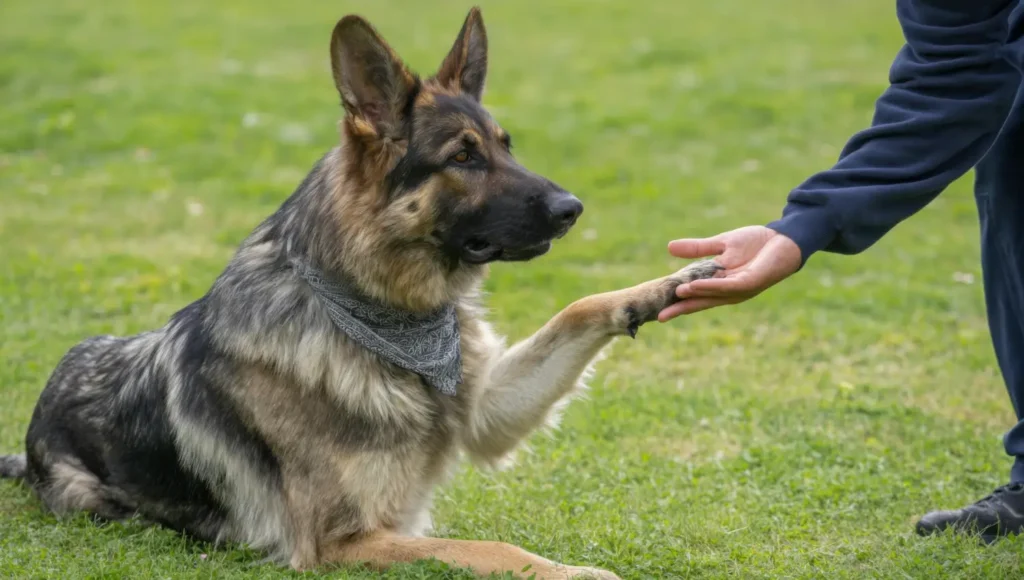
Easier than most, harder than some. That is the honest answer.
The things that make GSDs exceptional working dogs, their drive, their attentiveness to their handler, their ability to generalize learned behaviors, also make them highly responsive to training. They want to work. They want a job. Give them clear direction and they grab onto it fast.
The challenge is that same drive. A German Shepherd that is not mentally and physically satisfied will redirect that energy into problem behaviors. And their sensitivity to how they are handled means inconsistency from the owner creates confusion that shows up as stubbornness or reactivity. It is not the dog being difficult. It is the dog responding to mixed signals.
The breed’s natural temperament is confident, alert, and deeply bonded to its handler. That bond is your biggest asset in training. A German Shepherd that trusts you will work hard for you. The relationship is the foundation everything else builds on.
When to Start Training a German Shepherd
The answer most people do not want to hear: the moment you bring the puppy home. Usually around 8 weeks old.
That does not mean formal obedience sessions twice a day. At 8 weeks, training looks like short interactions, 3-5 minutes, focused on one thing at a time. Sit. Name recognition. Coming when called. The goal at this stage is not precision. It is building the habit of paying attention to you and the association that engaging with you is rewarding.
The AKC recommends beginning basic command training as early as 8 weeks, noting that this is actually the ideal window before the dog’s attention becomes more difficult to hold. Waiting until 6 months to start training a GSD puppy is waiting too long. Bad habits establish quickly in a smart dog.
For adult dogs, you are not starting from zero, you are overwriting existing patterns. It takes more patience and more consistency, but it works. The methods are the same. Just expect the process to take longer.
The Foundation: Why Positive Reinforcement Works for This Breed
Positive reinforcement is not a soft approach. It is the most effective training method for German Shepherds specifically, and the research supports this clearly.
The American Veterinary Society of Animal Behavior recommends reward-based training as the primary method for all dogs, noting that aversive methods increase stress, anxiety, and the likelihood of aggression. For a breed with the GSD’s drive and sensitivity, this matters more than with lower-drive dogs.
In practice, positive reinforcement means: the dog does the right thing, the dog gets something it values. Food, praise, play, whatever motivates that particular dog. The behavior gets associated with a good outcome and becomes more likely to repeat.
What it does not mean: ignoring everything the dog does wrong. Redirection and interruption are part of the picture. But punishment, especially physical correction or harsh verbal reprimands, tends to backfire with German Shepherds. They are sensitive to their handler’s emotional state in a way that many breeds are not. A handler who is frustrated or harsh does not get a dog that tries harder. It gets a dog that shuts down or becomes anxious.
Keep training sessions short. Ten to fifteen minutes of focused work is more productive than an hour of diminishing attention. Multiple short sessions throughout the day beat one long one every time.
Essential Commands Every German Shepherd Should Know
Before specialized training, advanced tricks, or any task-specific work, these are the commands that matter. They are the building blocks for everything else, and they are what keep a large dog safe to live with.
The AKC identifies six core commands for all dogs: sit, down, stay, come, heel, and leave it. For a German Shepherd, all six are essential. Not optional.
Sit
The starting point. Simple to teach, immediate in application, and useful as a default behavior (asking the dog to sit instead of jumping, instead of pulling, instead of crowding the door). Lure with a treat held above the dog’s nose and moved back over the head. The moment the rear hits the ground, mark with a word (“yes” or a clicker) and reward. Repeat. It takes most GSD puppies less than ten repetitions to get this.
Down
From sit, lure the treat down toward the ground between the dog’s front paws. Some dogs go down smoothly, some need more work. Once down, mark and reward. Down is more submissive than sit for many dogs and can take more sessions to solidify, especially with confident GSDs. That is fine. Work it.
Stay
Sit or down first, then introduce the stay concept by taking one step back, returning immediately, and rewarding before the dog breaks. Build duration before distance. Most people try to add distance too fast and the dog follows. If the dog breaks, go back to a shorter distance and rebuild. Patience here pays off later.
Come (Recall)
The most important command you will ever teach. A reliable recall keeps a dog safe. Practice it constantly, make it the most rewarding thing that happens to your dog, and never call the dog to you for something it does not want (bath, nail trim, ending play). If you need the dog for something unpleasant, go get it. Poisoning the recall is one of the most common mistakes owners make.
Heel
Walking politely on a leash without pulling. Lure the dog into position at your left side, name it (“heel”), take a few steps, mark and reward for staying in position. Build duration gradually. Leash pulling is one of the most common complaints with large dogs, and it is entirely preventable with consistent early work.
Leave It
The dog ignores something it wants, on command. Start with low-value items and work up. Hold a treat in your closed fist, the dog will nose and paw at it, say leave it, wait. The moment the dog backs off, mark and reward with a different treat. Once reliable, apply to real-world items on the ground, then to other dogs, then to whatever your dog finds most distracting.
German Shepherd Puppy Training: 8 Weeks to 6 Months

Puppy training is less about commands and more about building habits, establishing trust, and getting the socialization right. Commands matter, but the foundation built during this window shapes everything that comes after.
8-12 weeks: the basics
Name recognition, sit, come. Short sessions, multiple times a day. Introduce the crate as a positive space from day one. A well-introduced crate is not a punishment, it is a den. Getting the crate size right matters, too small is uncomfortable, too big removes the den feeling. The crate serves as a management tool during the puppy phase while you build the behaviors you actually want.
Start leash introduction during this window too. Put the leash on during positive experiences, let the puppy drag it around supervised, gradually pick it up and follow the puppy. Keep it pressure-free at first.
3-6 months: building on the foundation
Add down and stay. Extend the duration and distance on recall. Introduce the puppy to as many different environments, people, and experiences as safely possible. This is the socialization window, and missing it has consequences that are hard to undo.
VCA Animal Hospitals notes that dogs insufficiently socialized during the 3-14 week window often develop lasting fear and anxiety responses. For a breed with GSD’s protective instincts, poor socialization during this period is the most common root cause of aggression problems later. The puppy that gets out constantly during this window becomes the adult that handles the world confidently.
Introduce basic leash manners. Not full heeling, just the concept of walking without pulling. Keep sessions short. Puppies lose focus fast.
The adolescent phase: 6-18 months
This is where most owners lose ground. The puppy was doing so well and suddenly seems to have forgotten everything. Selective hearing, pulling harder, testing limits.
It is not defiance. It is adolescence. The dog’s brain is going through significant development, hormones are shifting, and they are more distracted by the environment than they used to be. The solution is not punishment, it is going back to basics in higher-distraction environments. If the dog can sit perfectly in the kitchen, practice sit outside. Then at the park entrance. Then with another dog nearby. Build reliability in context, not just in comfortable settings.
Do not reduce training frequency during adolescence. Increase it. This is the period when consistency matters most.
Training an Adult German Shepherd

It can absolutely be done. The idea that you cannot teach an old dog new tricks is wrong for most dogs and especially wrong for German Shepherds.
The main difference with an adult dog is that you are working against established habits rather than writing on a blank page. If the dog has already learned that pulling on leash gets it where it wants to go, that is a reward history you need to counter. It takes more repetitions to overwrite a behavior than to teach one fresh. But it works.
Start from scratch with the core commands regardless of what the dog already knows. This establishes a baseline and often reveals gaps. A dog that sits reliably at home may fall apart at the park. That is a proofing issue, not a training failure.
Rescue dogs with unknown histories need patience. Some come with significant fear or anxiety that affects their ability to learn. Keep sessions short, keep the environment calm, and let the dog build confidence gradually. Pushing too hard or too fast creates more problems.
Socialization as Part of Training
Socialization is not a separate activity from training. It is training. It is the process of teaching the dog that the world is safe, predictable, and navigable.
A well-socialized GSD reads the environment accurately. It knows the difference between a real threat and a stranger walking by. It can be taken to new places without melting down. It coexists with other dogs and with people it does not know. All of that is learned, not innate, and the window for learning it most efficiently is the puppy stage.
Exposure needs to be positive. A puppy dragged up to a scary stranger while it is trying to retreat is not being socialized. It is being overwhelmed. Let the dog set the pace. If it is curious, let it approach. If it is uncertain, do not force it. Pair unfamiliar things with food and calm handling.
For families with children, the socialization work that happens with kids specifically matters a lot. How a GSD behaves with children depends heavily on early experience. The guide on GSDs and kids covers introductions and management in detail.
The protective instinct in this breed is real and well-documented. It does not need to be trained in, it is already there. What needs to be trained is the judgment to use it appropriately, and that comes from a dog that has been properly socialized and can accurately read context. More on how the protective instinct actually works and how to channel it.
Exercise and Mental Stimulation as Training Tools
A tired German Shepherd is a trainable German Shepherd. A German Shepherd running on pent-up energy is fighting its own arousal level the entire time you are trying to work with it.
The breed needs significant daily exercise. Adults need an hour or more of real activity, not a walk around the block. Running, fetch, structured play, agility work, swimming. Whatever the dog enjoys and whatever gets the energy out. The exercise requirements for this breed go into specifics on what counts and how to structure it by age.
Mental stimulation matters as much as physical exercise for this breed. A GSD that is physically tired but mentally understimulated is still a dog looking for an outlet. Training itself is mental work. Puzzle feeders, scent games, hide and seek, teaching new commands, all of these tire the brain in a way that physical exercise alone does not.
The practical application: exercise your dog before a training session, not after. A dog that has burned off some energy is more focused and more receptive than one that is bouncing off the walls. Twenty minutes of structured play before a ten-minute training session beats an hour of sitting in the house.
Common Training Mistakes to Avoid
Inconsistency
The single biggest problem. If the dog is allowed on the couch sometimes but not others, it will keep trying. If the recall command is used without always following through, it stops working. Dogs learn patterns. If the pattern is inconsistent, they learn that the rule is inconsistent. Pick your rules and stick to them, every person in the household.
Sessions that are too long
Ten to fifteen minutes of focused work. After that, attention degrades and you are reinforcing imprecise responses. Better to end on a success than to grind through a session where both of you are losing focus.
Poisoning the recall
Never call the dog to you for something unpleasant. The recall needs to be the best thing that happens to the dog, every time. If you need to do something the dog does not want, go get it rather than calling it.
Skipping proofing
A command that only works in the kitchen is not trained. It is practiced in one context. Proofing means practicing the command in different locations, with different distractions, at different distances. Build reliability across contexts, not just in comfortable settings.
Punishment-based correction
Leash corrections, alpha rolls, harsh verbal reprimands. These tend to suppress behavior without teaching the dog what to do instead, and with a sensitive breed like the GSD, they often create anxiety and shut-down behavior. A dog that stops doing something out of fear is not the same as a dog that understands what is wanted. The behavior usually comes back in a different form.
Waiting too long to start
Eight weeks is not too young. The puppy phase is the easiest time to establish habits. Every week of delay is a week of patterns establishing without your input.
When to Get Professional Help
Some situations benefit from professional guidance. There is no shame in it, and catching problems early makes them significantly easier to address.
Aggression of any kind toward people or other animals is worth getting professional eyes on. A trainer or behaviorist who specializes in behavior modification, not just obedience, can assess what is driving the behavior and put together a plan. The guide on GSD aggression covers how to identify what type of aggression you are dealing with before seeking help.
Significant anxiety, extreme reactivity, or a dog that has shut down and is not engaging at all also benefit from professional assessment. These are not obedience problems. They are emotional regulation problems, and they need a different approach.
When choosing a trainer, look for someone who uses positive reinforcement methods and can explain their reasoning. Ask about their experience with working breeds specifically. A trainer who primarily works with companion dogs may not have the right tools for a high-drive GSD.
Looking for a German Shepherd puppy?
At Shepherd Kingdom our puppies are raised with early handling and socialization built into the process, giving you a head start on the training work ahead.
See available puppies, or get in touch with any questions about the breed.
Frequently Asked Questions
Are German Shepherds easy to train?
Easier than most breeds, but not without their challenges. They are highly intelligent and responsive to clear direction. The difficulty comes from their energy level and drive, which require consistent outlets. A GSD that is properly exercised and mentally stimulated is significantly easier to train than one that is not.
At what age should I start training my German Shepherd?
As soon as you bring the puppy home, usually around 8 weeks. Start with name recognition, sit, and recall. Keep sessions short. The socialization work should begin immediately too.
What are the most important commands for a German Shepherd?
Sit, down, stay, come, heel, and leave it. These six cover the most common real-world situations and form the foundation for any specialized training. Recall is the most critical safety command of the group.
How long does it take to train a German Shepherd?
Basic commands take days to weeks. Reliability in different environments and with distractions takes months. Some aspects of training, like leash manners in high-distraction environments, are ongoing throughout the dog’s life. Training is not a phase you complete. It is a relationship you maintain.
Can I train a German Shepherd myself?
Yes, for the vast majority of training goals. Basic obedience, leash manners, socialization, crate training, all of this is manageable without a professional if you are consistent and doing your research. Where professional help becomes valuable is with behavioral problems like aggression or significant anxiety, and with advanced task-specific training.
Why does my German Shepherd ignore commands it knows?
Usually one of three things: the environment is too distracting and the command has not been proofed in that context, the dog has learned that the command is optional because follow-through has been inconsistent, or the dog is in an aroused state where learning is difficult. Go back to basics in a lower-distraction environment and rebuild from there.
Is positive reinforcement really better than corrections for German Shepherds?
Yes, consistently. The research supports it and the breed’s sensitivity to handler emotion makes punishment-based approaches particularly counterproductive. A GSD trained with positive reinforcement is more reliable, more confident, and has a better relationship with its handler than one trained with aversive methods.
