
Rare German Shepherd Colors You’ve Probably Never Seen
Most people picture the same dog when they hear German Shepherd: black saddle over a tan body, upright ears, alert expression. That classic look covers probably 80% of the breed. But the other 20% is where things get interesting.
German Shepherds come in a range of coat colors that most people have never seen in person. Some are simply uncommon. Others are genuinely rare, produced only by specific combinations of recessive genes that have to line up just right. A few sit outside the breed standard entirely and come with a warning about the breeders chasing them.
This guide covers the full spectrum of rare GSD coat colors: what causes each one, what these dogs actually look like, what the AKC says about them, and the one thing worth knowing before you pay a premium for an unusual color.
From Uncommon to Genuinely Rare: How to Think About GSD Color Rarity
Not all rare colors are created equal. Some show up fairly regularly in certain breeding programs. Others are so genetically improbable that most breeders go their entire careers without producing one.
A rough way to rank them:
- Uncommon but findable: White, solid black, solid sable
- Rare: Blue, liver, panda
- Very rare: Fawn, albino
- Rarest of all: Isabella
The standard colors, things like black and tan, black and red, black and silver, and the saddle coat pattern, are covered in other articles on the blog. If you want the full picture of GSD types and coat patterns, that is a good place to start. This article focuses on the colors that fall outside the everyday range.
Rare German Shepherd Colors: From Uncommon to Almost Impossible to Find
Here is a breakdown of each rare GSD color: what it looks like, what causes it genetically, and what the AKC says about it.
White German Shepherd
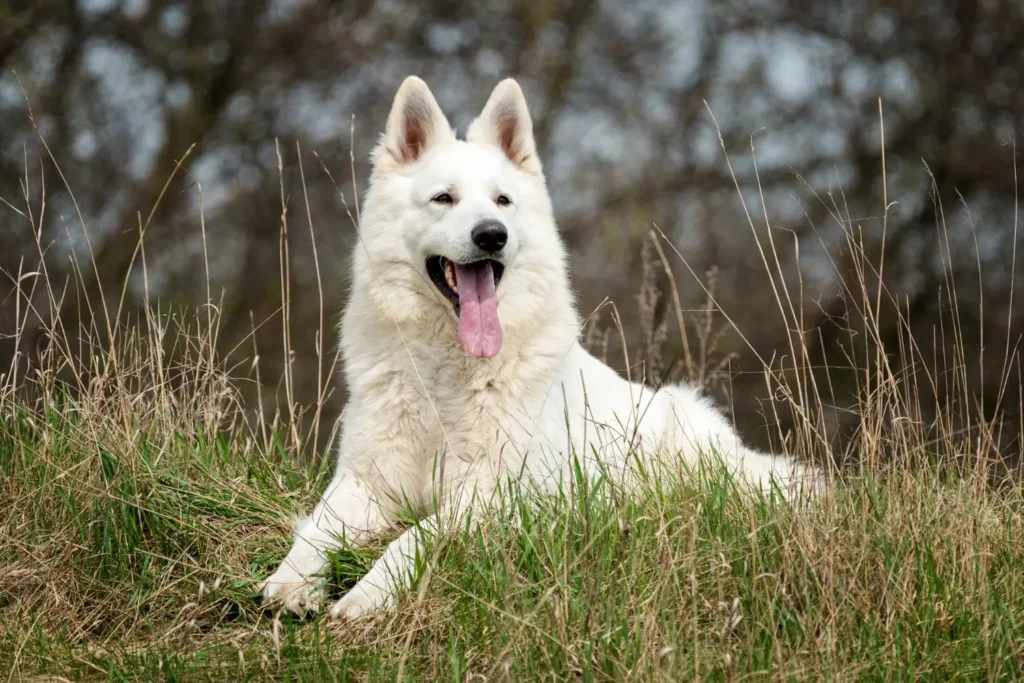
White is probably the most searched and most misunderstood of all rare GSD colors. These dogs are not albino, not a different breed, and not a genetic defect. They are purebred German Shepherds carrying a recessive gene that masks all pigmentation in the coat, leaving it fully white.
The confusion with albinism is understandable but incorrect. A white GSD has normal pigmentation everywhere except the coat: dark eyes, black nose, black paw pads. An albino dog has no pigmentation anywhere, including pink or red eyes. The two are completely different genetically.
The irony is that white has been part of the breed since the very beginning. Horand von Grafrath, the first registered German Shepherd and the foundation sire of the entire breed, had a white grandfather. The color did not appear from nowhere. It was there from the start.
History has not been kind to white GSDs despite that. Germany began culling them from breeding programs in the 1950s, wrongly associating the white gene with genetic weakness. That stigma stuck around for decades and still shows up in some corners of the show world today. The AKC breed standard disqualifies white dogs from conformation competition. The United Kennel Club takes the opposite stance and recognizes them.
In terms of character, white GSDs are identical to any other German Shepherd. The color is the only difference. They are not weaker, not unhealthier, not more difficult. We have a dedicated White German Shepherd guide if you want the full picture.
Blue German Shepherd
The blue GSD is one of those dogs that stops people in their tracks. The coat is not actually blue in the way a summer sky is blue. It is a diluted black, a slate gray with a distinctly cool, almost bluish undertone that catches the light in a particular way. Combined with lighter eyes and a blue-gray nose, the overall effect is genuinely striking.
The color comes from a recessive dilution gene that partially suppresses black pigment. Both parents need to carry this gene for a blue puppy to appear, which is why the color is uncommon even from breeders who are not specifically selecting for it.
The AKC considers blue a serious fault in the German Shepherd breed standard, meaning blue dogs are penalized or disqualified in the show ring. This has no bearing on the dog’s temperament or ability to work. It is purely a show world designation.
One health consideration worth knowing: the dilution gene has been associated with Color Dilution Alopecia (CDA) in several breeds. CDA causes patchy hair thinning and skin inflammation, typically appearing between six months and three years of age. The correlation is not 100% in German Shepherds and research is limited, but it is real enough that it is worth asking any breeder of blue GSDs whether they have seen cases in their lines and what their protocol is if a puppy develops symptoms. A breeder who has never heard of CDA is not a good sign.
Beyond CDA, blue GSDs generally have the same health profile as the broader breed. Our full Blue German Shepherd guide covers everything you need to know.
Liver German Shepherd
Liver is a deep, warm brown that replaces all the black pigment in a standard GSD coat. Where a black and tan dog has a black saddle, a liver dog has a rich chocolate-brown saddle. The tan or cream markings remain but take on a warmer tone alongside the liver coloring. Some liver GSDs are entirely solid brown.
The color is caused by a recessive gene at the B locus that completely blocks black pigment production. Both parents must carry at least one copy of this gene for a liver puppy to be born, even if neither parent appears liver themselves. A liver dog will have a brown nose, brown eye rims, and amber or hazel eyes instead of the dark eyes of a standard GSD.
Like blue, the AKC classifies liver as a serious fault. The coat stays consistent throughout the dog’s life, which is unusual since many GSD colors shift somewhat as the dog matures.
Liver German Shepherds are rare enough that you are unlikely to find one at a shelter. Breeders who produce them are often specifically selected for the color, which brings up a point worth addressing later in this article.
Isabella German Shepherd: The Rarest GSD Color of All
Isabella is the rarest color in the German Shepherd breed. Full stop. To produce an Isabella GSD, a puppy needs to inherit both the liver gene and the blue dilution gene from both parents simultaneously. That is two separate recessive genes that both need to align. The probability is low enough that many experienced breeders have never seen one.
What does an Isabella GSD actually look like? The coat is a diluted liver, landing somewhere between pale taupe, dusty lilac, and washed-out fawn depending on the light. The nose ranges from pink to light liver. The eyes are typically light blue or hazel. There is no black pigment anywhere on the dog, not on the paw pads, not on the eye rims, not on the nose.
The AKC does not recognize Isabella as an accepted color and classifies it as a fault. The color is sometimes called lilac GSD, which captures the soft, unusual quality of the coat reasonably well.
Isabella dogs are not inherently less healthy than other GSDs because of their color, but the genetics involved are worth understanding. Breeding specifically for two recessive traits simultaneously tends to narrow the gene pool, which can increase susceptibility to other hereditary conditions over generations. Any breeder claiming to consistently produce Isabellas should be asked detailed questions about health testing.
Panda German Shepherd
The panda GSD is one of the most visually distinctive dogs in the breed, and also one of the most misunderstood. People see the black, white, and tan patchwork and assume it must be a mix. It is not. Panda German Shepherds are purebred.
The panda pattern came from a spontaneous genetic mutation in a single dog: Lewcinka’s Franka von Phenom, born in 2000 to a purebred black and tan GSD and a purebred solid black GSD with no white ancestry anywhere in the pedigree. The mutation affected a gene called KIT, producing the white spotting pattern we now associate with panda GSDs.
The pattern typically shows up as white on the muzzle, chest, collar, and tip of the tail, with the rest of the coat carrying the standard black and tan coloring. The amount of white varies between individual dogs.
There is a genetic consideration worth knowing: the KIT mutation is dominant, meaning one copy produces the panda pattern. But two copies of the mutation are lethal. This means panda dogs can never be bred together to produce panda puppies reliably. Every panda GSD must have one non-panda parent.
This is also what separates the panda from the dilution-based rare colors like blue and liver. The KIT mutation does not affect pigment intensity in the colored areas of the coat. The black stays fully black, the tan stays fully tan. There is no associated risk of Color Dilution Alopecia or coat texture changes. The white patches are simply areas where pigment cells never migrated during embryonic development. Genetically and health-wise, this is a fundamentally different situation from a dog carrying the blue or liver dilution gene.
The AKC does not recognize panda as an accepted color. Demand for them has increased significantly since the early 2000s, which has unfortunately attracted breeders more interested in the color than in health testing or temperament.
Albino German Shepherd
True albino German Shepherds are extraordinarily rare, and most dogs labeled as albino are actually white GSDs. The distinction matters.
A white GSD has a recessive gene that masks coat color but leaves pigmentation intact elsewhere: dark eyes, black nose, black paw pads. A true albino has no pigmentation anywhere in the body. The eyes appear pink or red because blood vessels are visible through the unpigmented iris. The nose and skin are also pink.
Albinism comes with real health implications. Albino dogs are typically photosensitive, prone to sunburn, and can have vision problems. If you see a dog advertised as an albino GSD, check the eyes and nose. Pink or red eyes and a pink nose indicate true albinism. If the eyes are blue or the nose has any pigment at all, the dog is likely a white GSD, not an albino.
Because of the health complications and the confusion with white GSDs, true albino GSDs are not something responsible breeders aim to produce.
Fawn German Shepherd
Fawn is probably the least well-known of the rare GSD colors. The coat is a very pale golden or cream tan, lighter than the standard tan markings and without the rich depth of color typically seen in the breed. Some fawn GSDs look almost blonde in certain light.
It tends to appear in litters from white or very light-colored parents, suggesting it involves some of the same recessive mechanisms. Some puppies are born looking fawn and darken significantly with age, so a truly fawn adult GSD is rarer than a fawn puppy.
The color is not recognized as a separate classification by the AKC. It is considered a washed-out or pale variation, which puts it in fault territory under the breed standard’s preference for strong, rich colors.
Rare German Shepherd Coat Colors: What the Breed Standard Actually Says
It is worth understanding exactly where each rare color stands with the AKC before you start looking for one. The breed standard is clear, and knowing this upfront helps you avoid surprises later.
- Accepted but uncommon: Solid black. Fully recognized, can compete in conformation shows.
- Serious fault: Blue and liver. These dogs can be AKC registered as purebred German Shepherds but are penalized in the show ring.
- Disqualifying fault: White. Automatically disqualified from AKC confirmation competition, though fully registerable.
- Not recognized: Panda and Isabella. Outside the breed standard entirely, though dogs can still be AKC registered.
None of this affects a dog’s temperament, trainability, or suitability as a family companion. It is purely a show world classification. If you are not planning to compete in conformation, the AKC’s stance on coat color is largely irrelevant to your daily life with the dog.
The One Thing Worth Knowing Before You Pay for a Rare Color
Every rare color on this list commands a higher price than a standard black and tan GSD. Sometimes significantly higher. And every rare color has attracted breeders whose primary motivation is selling the novelty, not producing a healthy, well-tempered dog.
This matters because color does not come from nowhere. Breeding specifically for a rare recessive combination often means making choices that prioritize coat genetics over health testing, structure, and temperament. Over generations, that narrowing of the gene pool can produce dogs with more health problems, weaker nerves, or structural issues that a breeder focused purely on color may not catch or care about.
Max von Stephanitz, the man who created the German Shepherd breed, had a specific view on this: “the coloring of the dog has no significance whatsoever for service.” He was not wrong. A blue GSD with solid hips, tested parents, and good temperament is worth a significant premium. A blue GSD from a breeder who cannot show you health certifications and cannot tell you anything about the parents beyond their color is not worth more than any other poorly bred dog, regardless of how unusual it looks.
Before paying extra for any rare color, ask the breeder:
- Can you provide OFA health certifications for both parents’ hips and elbows?
- What are the parents’ temperaments like, and can I meet them?
- What health testing have you done beyond hip and elbow screening?
- Do you have a health guarantee, and what does it actually cover?
A breeder who cannot answer these questions is selling color, not dogs. Our guide to finding a good German Shepherd breeder walks through what to look for in more detail.
Finding a German Shepherd in Any Color
If you are looking for a German Shepherd puppy, whether in a standard color or something more unusual, the starting point is always the same: find a breeder you can trust, not a color you cannot resist.
The temperament, health, and character of the dog will matter every single day for the next twelve years. The coat color will matter on the first day and then become background noise.
Browse our available German Shepherd puppies or get in touch with us and we will help you find the right dog for your family.
-
 Select options
Blossom
$1495Meet BlossomFemale 16 WeeksOne or both of this puppy's parents have undergone genetic testing.This puppy has had early neurological stimulation exercises. -
Select options
Beverly
$1495Meet BeverlyFemale 16 WeeksOne or both of this puppy's parents have undergone genetic testing.This puppy has had early neurological stimulation exercises. -
Select options
Harlow
$1795Meet HarlowFemale 13 WeeksOne or both of this puppy's parents have undergone genetic testing.This puppy has had early neurological stimulation exercises. -
Select options
Iris
$1795Meet IrisFemale 13 WeeksOne or both of this puppy's parents have undergone genetic testing.This puppy has had early neurological stimulation exercises.

Frequently Asked Questions
What is the rarest color of German Shepherd?
Isabella is generally considered the rarest GSD color. It requires a puppy to inherit both the liver gene and the blue dilution gene from both parents at the same time, which involves two separate recessive genes aligning simultaneously. Many experienced breeders have never produced one.
Are rare-colored German Shepherds less healthy?
The color itself does not cause health problems. What can cause problems is irresponsible breeding that prioritizes rare color genetics over health testing and sound temperament. A rare-colored GSD from a responsible breeder who health tests both parents is no less healthy than a standard-colored dog.
Does the AKC recognize rare GSD colors?
The AKC recognizes most standard GSD colors but classifies blue and liver as serious faults, and disqualifies white dogs from conformation competition entirely. Panda and Isabella are not recognized at all. None of this affects a dog’s ability to be registered with the AKC as a purebred German Shepherd.
Is a white German Shepherd the same as an albino?
No. A white GSD has a recessive gene that masks coat color but retains pigmentation elsewhere: dark eyes, black nose, black paw pads. A true albino has no pigmentation anywhere and will have pink or red eyes and a pink nose. Most dogs sold as albino GSDs are actually white GSDs.
Are panda German Shepherds purebred?
Yes. The panda pattern comes from a spontaneous genetic mutation first documented in 2000. Panda GSDs are fully purebred German Shepherds. The pattern is not the result of crossbreeding with another breed.
Why do rare GSD colors cost more?
Supply and demand. Rare colors require specific genetic combinations that are difficult to reproduce reliably, which limits how many breeders can produce them and how often. That scarcity drives prices up. It also attracts breeders who prioritize producing the color over producing a healthy dog, so due diligence with breeders of rare-colored GSDs is especially important.
