
The White German Shepherd Is the Dog They Tried to Erase
Banned, mislabeled as defective, and nearly bred out of existence by people who confused politics with genetics. Here’s the truth, and why so many people end up completely obsessed with one.
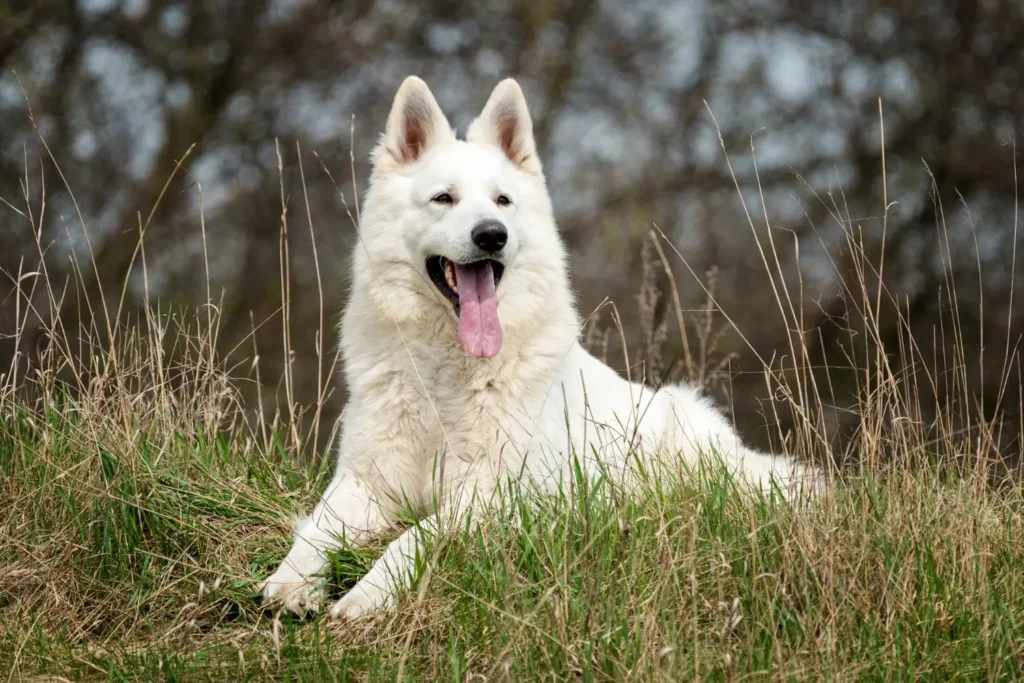
Nobody who sees a White German Shepherd for the first time is neutral about it. Either it stops them cold, that pure, almost impossible coat on a dog with such obvious power and intelligence, or it triggers some vague unease they can’t quite name. A feeling that white isn’t quite right for this breed. That something has been diluted.
That unease has a history. It was deliberately manufactured, built across decades by people who made decisions about genetics with bad science and worse motives. The white German Shepherd wasn’t rejected because it was defective. It was rejected because of politics, and a community of stubborn, dedicated breeders spent the better part of a century being quietly, persistently right about it.
At Shepherd Kingdom, this is one of the colors we get asked about most. People want to know if the controversy means something. It does, but only as a history lesson, and the lesson goes in the opposite direction from what most people assume.
The History Nobody Puts in the Brochure
Start with the grandfather. Greif, the grandfather of Horand von Grafrath, the dog universally recognized as the foundation of every German Shepherd alive today, was a white herding dog. The white coat wasn’t a corruption of the breed’s genetics at the very beginning, woven into the lineage that every German Shepherd traces back to.
1933 happened, and under Nazi leadership in Germany, breed standards were rewritten through the lens of a fashionable pseudoscience about genetic purity.
White coats, associated in some other breeds with albinism-linked health defects, were labeled a defect across the board, without any distinction between albinism and the completely separate masking gene responsible for white Shepherds.
The science didn’t support the decision. It didn’t need to. The ruling stuck, and it followed the breed out of Germany and into dog associations worldwide over the following decades.
By 1959 in the United States, white German Shepherds were registerable but barred from competition. By 1968, they were banned from the confirmation ring entirely. A dog whose ancestor founded the breed was now officially classified as a fault within it.
The white coat wasn’t a genetic flaw. It was a political casualty, and the dog paid for it for nearly a century.
What saved them was a group of breeders in the 1970s who decided a healthy, capable dog deserved better than erasure. They formed their own clubs, maintained their own records, and kept breeding. An American-bred white Shepherd named Lobo White Burch, born in 1967, was exported to Switzerland and became the foundation of what eventually developed into the White Swiss Shepherd, now recognized internationally by the Fédération Cynologique Internationale as its own distinct breed.
The dog that was supposed to disappear ended up founding a new line entirely.
To understand where white fits within the full scope of what this breed has become across a century of development, our breakdown of the different types of German Shepherds gives you the full picture, bloodlines, working types, and how each developed its own identity.
What the White Coat Is (And Isn’t)
The genetics, kept mercifully short: the white coat in German Shepherds is produced by a recessive masking gene. That gene doesn’t create white pigment, it suppresses whatever color the dog would otherwise express. Underneath that coat, a white German Shepherd is genetically some other color entirely. The masking gene covers it completely.
This is categorically different from albinism. An albino dog lacks pigment everywhere, including in the eyes and skin, which appear pink or very pale as a result. A white German Shepherd has dark eyes, black nose leather, and dark skin beneath the coat. The pigment system functions perfectly. It’s just being blocked from the fur.
Both parents need to carry the recessive gene for white puppies to appear. Two colored German Shepherds who both carry it can produce white puppies without either parent appearing white, the same mechanism as two dark-haired parents having a blonde child. The gene was always there. It just needed both copies to land in the same dog.
The albinism myth, settled
If someone tells you white German Shepherds are albinos or that the white coat causes health problems, ask them to look at the dog’s nose and eyes. Dark eyes, black nose leather, that’s a masking gene, not albinism. The health concerns associated with albinism in other breeds do not apply here. Hip and elbow dysplasia affect white and colored Shepherds at identical rates. The coat is cosmetic. The dog underneath it is not diminished in any way.
Coat genetics also interact with coat length in ways that change the visual entirely. A long-coated white German Shepherd is genuinely something different to see, more surface area, more texture, the white catching light across each individual guard hair. Our guide on German Shepherd coat lengths covers what each variety involves day-to-day, and the full deep-dive on long-haired German Shepherds covers that variation specifically.
What a White German Shepherd Is Like to Live With

In photographs they look theatrical. In person they look like someone turned the contrast all the way up. The white coat against the German Shepherd’s natural build, broad chest, strong neck, those upright ears that seem to catch every sound, produces something that reads simultaneously elegant and formidable in a way that’s difficult to describe until you’re standing next to one.
The face is where most people pause longest. White German Shepherds don’t have a dark mask, which changes the expression completely, the eyes come forward, the face reads as more open, the dog appears less guarded. People who find standard German Shepherds slightly intimidating often find white ones immediately approachable. People who already love the breed tend to find something almost regal about them.
You will also be asked, many times, if it’s a Husky mix. This is the tax you pay for the coat.
Summer With a White Coat: The Real Deal
White reflects heat rather than absorbing it, which means white German Shepherds handle direct sun genuinely better than black-coated dogs do. On a hot trail, this is a real advantage.
But the double coat still insulates, and German Shepherds were built for work, not lounging in the shade, so heat management still matters. Watch your dog, not the thermometer. Our guide on why German Shepherds pant so much explains what’s normal breathing versus what warrants actual attention.
The other summer reality is staining. White coats pick up everything, grass, mud, iron-rich water, pollen, whatever’s blooming that week. A white German Shepherd after a good run in wet grass looks less like a dog and more like abstract art. This is not a health issue. It is a grooming reality that comes with the color, and it is worth knowing before you fall completely in love with the white coat and forget to think about what follows the first rainstorm.
Grooming: What the White Coat Needs
The double coat sheds exactly like any other German Shepherd, which is to say seasonally and in quantities that will make you reconsider your furniture choices. Daily brushing during spring and fall coat blow seasons is not optional. Between sheds, two to three times a week keeps the coat healthy and the house manageable.
The specific challenge with white is yellowing. Coat oils accumulate over time and give the pale areas a dingy cream-yellow cast that has nothing to do with dirt. A brightening shampoo formulated for white or silver coats, used monthly, not more, corrects this without stripping the natural oils the coat needs. Between baths, dry shampoo or a damp chamois cloth over the coat handles most situations cleanly.
Do not shave the coat for summer
The double coat doesn’t trap heat the way people assume, it regulates temperature in both directions, keeping warmth out as well as in. Shaving removes that system entirely and leaves the skin directly exposed to UV. The coat is doing a job. Letting it do that job is the right answer, every time. Our German Shepherd summer cut guide covers exactly what’s safe and what causes more problems than it solves.
For tools: an undercoat rake for the dense inner coat, a slicker brush for the guard hairs, a deshedding tool for heavy shed season. Our review of the best brushes for German Shepherds covers what works versus what’s mostly packaging.
Temperament: The Same Dog, Different Coat
The White German Shepherd Dog Club of America describes the breed standard temperament as direct, fearless, and confident. Not timid. Not anxious. Not shrinking. The same breed that has served in police work, search and rescue, and service roles does so equally in white, because the coat is not connected to any of the systems that produce those qualities.
What shapes temperament is bloodline quality, socialization, and training. A white German Shepherd from a thoughtful, health-tested program, raised with real socialization and consistent boundaries, will be one of the most responsive and devoted dogs you’ve ever met. Our guide to German Shepherd personality and what to expect is the honest version of that conversation, not the marketing version.
The coat changes what strangers project onto the dog. It doesn’t change the dog.
It’s also worth knowing how protective instincts show up in this breed before you bring one home, white Shepherds are just as naturally alert and territorial as any other color, and that quality needs to be channeled correctly. Our piece on whether German Shepherds are protective covers that honestly.
Training and Exercise: Nothing Changes With the Color
Ninety minutes of real exercise daily. Not a slow loop around the block, movement that genuinely taxes both body and brain. German Shepherds were bred for sustained work, and that drive doesn’t negotiate based on coat color. A white Shepherd who doesn’t get what it needs will find something to do with that energy, and that something is almost always inconvenient.
Mental stimulation matters as much as physical exercise. Scent work, structured training sessions, puzzle feeders, anything that requires the dog to think. Our guide on how much exercise a German Shepherd needs gives you real numbers and practical structures for every life stage.
Socialization in that first sixteen weeks is especially critical for a dog that will spend its entire life drawing attention from strangers. Children reaching, people stopping mid-trail, adults asking if it’s part wolf, a dog that hasn’t been socialized to handle that kind of unpredictable human interest will struggle with what should just be a pleasant walk.
Start at eight weeks. Keep it positive. Treat it like the non-renewable resource it really is. The German Shepherd training guide covers the full arc from early socialization through advanced obedience.
The male versus female question shifts the training picture in real ways worth thinking through before you choose a puppy. Our comparison of male vs. female German Shepherds covers what differs day-to-day, not the mythology.
Health: What the Color Does and Doesn’t Affect
The white coat is not a health variable. Hip dysplasia, elbow dysplasia, and degenerative myelopathy, the conditions that responsible German Shepherd breeders screen for as standard, affect white and colored dogs at identical rates. The 1930s pseudoscience that claimed otherwise has been dismantled completely by modern genetics. What determines health outcomes is the quality of the breeding program and the screening performed before the puppy is born.
A German Shepherd lives ten to thirteen years on average. Those years are shaped primarily by decisions made long before you met the dog. Our guide to German Shepherd lifespan and how to extend it covers the health factors that move that number, and none of them are about coat color.
Before committing to any breeder
Ask for OFA hip and elbow clearances on both parents, plus degenerative myelopathy DNA testing. These are the baseline for any responsible German Shepherd program, white coat or otherwise. A breeder who can’t produce this documentation immediately, not eventually, not after some searching, is operating without the foundation that makes a health guarantee mean anything at all.
Why the Search for a White German Shepherd Ends at Shepherd Kingdom
Because both parents need to carry the recessive masking gene, white puppies aren’t produced on a schedule. Most programs encounter this color occasionally, a litter here and there when the genetics happen to align. The ones who produce it intentionally, who understand the bloodlines behind it and can document the health of every dog in their program, are rarer than the puppies themselves. That’s the standard Shepherd Kingdom was built to meet.
What a Program Worth Trusting Looks Like
The search process tells you everything. A breeder who can explain what makes their white dogs white, who understands the masking gene and can trace it through a pedigree rather than pointing at a beautiful photo, is a breeder operating from real knowledge. A breeder who leads with coat color and fumbles when you ask about hip clearances is one optimizing for the sale, not the dog.
At Shepherd Kingdom, our 2-year genetic health guarantee is backed by real documentation, not promises made at the door. Every puppy we place comes from parents with verified clearances, raised inside a family home by people who understand what early development requires.
Our breeders page explains the standards we hold our program to and why we’d rather place fewer puppies than compromise the process to place more.
Why Families Keep Choosing Us
There’s a version of finding a German Shepherd that goes: find a listing, send a deposit, hope the dog matches the photos. Shepherd Kingdom is something different. We’re a family operation in Beach City, Ohio, where puppies are raised inside a home, around children, around the noise and routine and ordinary life the dog is about to walk into.
That environment isn’t a bonus. It’s what prepares a puppy to transition smoothly rather than spend its first month overwhelmed. Every puppy on our available puppies page has a video. You can watch them move, interact with their littermates, respond to people, before you ever make a phone call. Coat color photographs. Temperament shows up in motion. We want you to see both.
The families who’ve brought our puppies home aren’t quiet about it. Amy did her research, found us, and had her dog home the same day. Colin showed up and had his puppy waiting at the front door. Eric came for one puppy and left with two from different litters. Read what they said in their own words on our testimonials page, these are people who started exactly where you are now, and they talk about their dogs the way people talk about family members.
The Question That Reveals Everything About a Breeder
Before you commit to anyone, ask this: What happens to a puppy that doesn’t meet your standards?. A program with integrity has a real answer, pet placement with a spay/neuter agreement, or they keep the dog. Defensiveness or vagueness in response to that question is itself an answer worth reading clearly.
If you’re still building your understanding of the breed before you start the search, our guide to finding the best German Shepherd breeders walks through what separates a program worth trusting from one that photographs beautifully and delivers less. And if you want to understand how the white German Shepherd sits within the full spectrum of colors this breed produces, our look at the blue German Shepherd makes for a fascinating comparison, another rare color, another complicated history. When you’re ready to move from research to a real conversation, we’re here.
Meet Our Puppies
Hi! We’re a dog-loving family operation in Beach City, Ohio. Every puppy we place, white, sable, black and tan, or otherwise, comes from parents with full health clearances, raised in a home that prepares them for the life they’re about to live.
-
 Select options
Blossom
$1495Meet BlossomFemale 17 WeeksOne or both of this puppy's parents have undergone genetic testing.This puppy has had early neurological stimulation exercises. -
Select options
Beverly
$1495Meet BeverlyFemale 17 WeeksOne or both of this puppy's parents have undergone genetic testing.This puppy has had early neurological stimulation exercises. -
Select options
Harlow
$1795Meet HarlowFemale 14 WeeksOne or both of this puppy's parents have undergone genetic testing.This puppy has had early neurological stimulation exercises. -
Select options
Iris
$1795Meet IrisFemale 13 WeeksOne or both of this puppy's parents have undergone genetic testing.This puppy has had early neurological stimulation exercises.