
Working Line German Shepherd: What Nobody Tells You Before You Get One
When Max von Stephanitz created the German Shepherd breed in 1899, he had one thing in mind: utility. A dog that could work all day, think for itself under pressure, and still come home at night as a loyal family companion. He was not thinking about dog shows or coat color. He wanted a working dog.
The working line German Shepherd is the closest thing alive today to that original vision. These are dogs bred for function over form, for drive over aesthetics, for real jobs in the real world. Police departments, military units, search and rescue teams, and Schutzhund competitors around the world rely on them.
But a lot of people who fall in love with the idea of a working line GSD have not spent much time around one in person. They see a viral video of a police dog or a sport competition and think, “oh my god this is the dog I want”. And sometimes it is not a good idea.
This guide explains what working line German Shepherds are, their three types and differences, their true temperament, and whether this dog is right for you.
What Is a Working Line German Shepherd?
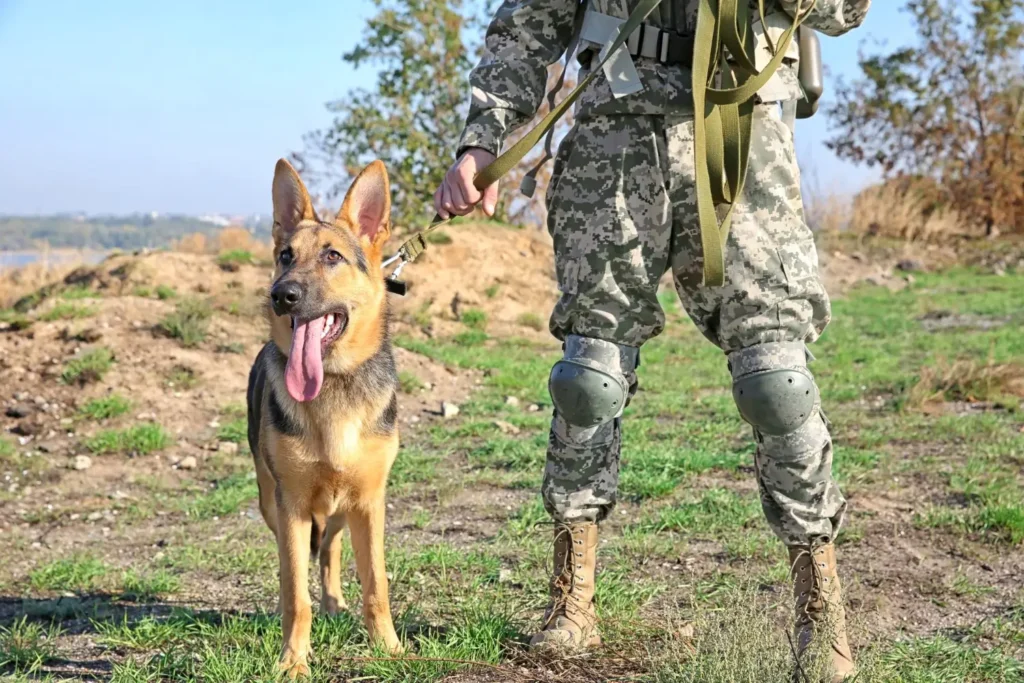
The term “working line” refers to German Shepherds bred specifically for working ability rather than conformation or appearance. Instead of being evaluated on how they look in a show ring, working line dogs are selected based on drive, nerve strength, physical soundness, and the ability to actually do a job.
The contrast with show line dogs is significant. Show line German Shepherds, particularly the West German Show Line, are bred to meet the visual standards of the SV (Verein fur Deutsche Schaferhunde, the German Shepherd Club of Germany) and similar organizations. They tend to be calmer, broader in body, and often carry the classic black and red saddle coat. Working line dogs look different. Straighter backs, more compact builds, and coats that run to sable, solid black, and bi-color rather than the rich red of the show world.
The straight back is worth mentioning specifically. One of the more common criticisms of American show line German Shepherds is the extreme rear angulation that became fashionable in North American breeding programs, producing a dog that walks with a distinctive sloping crouch. Working line dogs do not have this. Their structure is closer to what Von Stephanitz bred originally: a dog built to move efficiently for hours without breaking down.
According to the AKC breed standard, working ability and sound structure are fundamental requirements for the German Shepherd. Working line breeders take this more seriously than most.
The Three Main Types of Working Line German Shepherd
Working line is not one thing. There are three main subtypes, each with its own history, physical characteristics, and temperament profile. Understanding these differences matters a lot when you are deciding whether a working line GSD is right for you and, if so, which type.
West German Working Line
The West German Working Line (WGWL) is probably the most common working line type you will encounter from serious breeders in the US. These dogs come from German breeding programs that put dogs through working trials (primarily IGP, formerly known as Schutzhund) as a requirement for breeding certification.
Physically, they sit somewhere between the show line dogs and the harder East German types. They have a slight rear angulation but nowhere near the extreme slope of the American show line. Coats are typically sable or black and tan. They tend to be athletic and well-proportioned.
Temperament-wise, WGWLs generally have high prey drive and a strong desire to work with their handler. They are probably the most sport-oriented of the working line types, dominant in IGP competition. For a family with experience handling high-drive dogs and a genuine commitment to training and exercise, a well-bred WGWL can be a fantastic companion.
DDR German Shepherd (East German Working Line)
The DDR German Shepherd takes its name from the Deutsche Demokratische Republik, East Germany. After World War II, East Germany developed a closed breeding program under strict government control. For roughly 40 years, these dogs were bred in near-total isolation from West German lines, with one goal: produce the best possible military and border patrol dog.
The result is a dog with a very distinct look. DDR dogs have large, blocky heads, thick bone, heavy paws, and deep chests. Their pigment tends to be dark, often solid black or dark sable. They look powerful because they are powerful.
The DDR line is also known for producing dogs with notably sound hips and elbows, something the East German breeding program prioritized for practical reasons: a dog that breaks down physically cannot do border patrol work. The Orthopedic Foundation for Animals (OFA) data on GSD hip health shows how significant genetic selection pressure can be over generations. DDR breeders applied that pressure consistently for decades.
Temperament in DDR dogs tends toward the defensive side rather than pure prey drive. They are intensely loyal, tend to be territorial, and can be aloof or suspicious of strangers. This is not a dog for a first-time owner. Early and consistent socialization is critical.
Czech German Shepherd
Czech German Shepherds originated from Czechoslovakia’s military and border patrol programs, developed after 1955 and heavily influenced by DDR bloodlines. After the reunification of Germany in 1989, Czech lines became increasingly popular and have since been crossed extensively with West German working lines.
Physically, Czech dogs tend to be leaner and slightly smaller than DDR dogs, with a narrower chest and more agile build. Coat colors run dark, often sable or black. They are fast and athletic.
Czech German Shepherds are generally considered to have the highest drive of the three working line types. They are intense, quick, and very capable in sports and working roles. They also tend to have good on/off switches, meaning they can be highly engaged in a working context and then settle relatively quickly. That said, they require experienced handling. The combination of high drive and high intelligence means a bored or under-stimulated Czech GSD will find its own outlets, and they will not be outlets you enjoy.
For a deeper look at Czech and DDR lines specifically, we will be publishing dedicated guides to each. For an overview of all GSD types side by side, see our complete guide to German Shepherd types.
What Do Working Line German Shepherds Look Like?
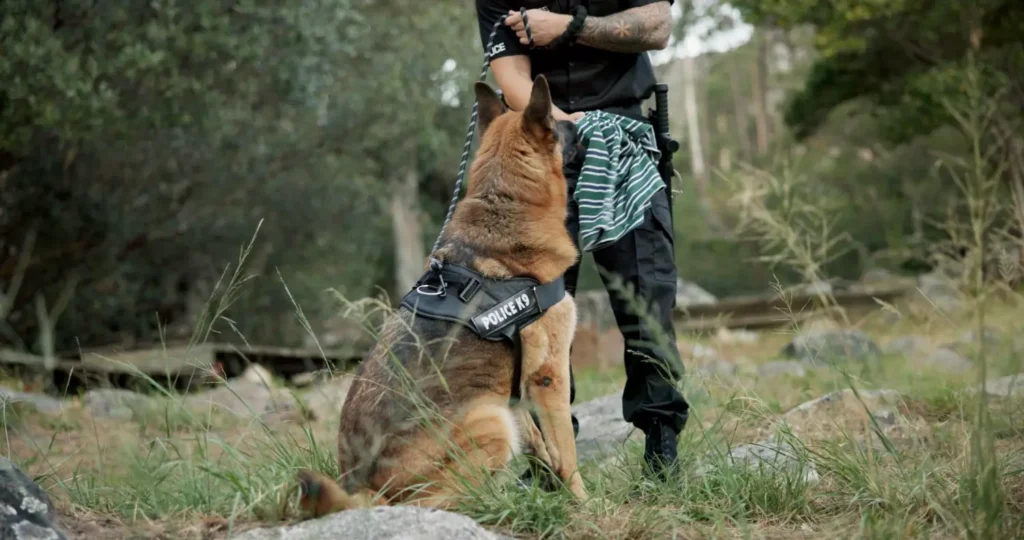
The most noticeable physical difference between working line and show line dogs is the back. Working line GSDs have a straighter topline. The rear angulation is moderate rather than extreme, which means they move more upright and with less of the “flying trot” associated with West German show dogs.
Beyond the back, here is what to expect physically:
- Build: compact and muscular rather than broad and heavily boned like a show line dog. Built for endurance and agility, not for presence in a ring.
- Head: varies by subtype. DDR dogs have large, blocky heads. Czech dogs tend toward a more refined head. WGWLs sit in between.
- Coat: typically shorter and coarser than show line dogs. Colors run to sable (the most common), solid black, and bi-color. The rich red and black saddle pattern associated with show lines is rare in working line dogs.
- Size: generally similar to the breed standard. Males 24 to 26 inches at the shoulder, 65 to 90 pounds. Females somewhat smaller. DDR dogs can be at the heavier end.
For more detail on coat types and how grooming needs differ, our guide to German Shepherd coat lengths covers the specifics.
Temperament: What It Is Actually Like to Live With One
This is the section most guides gloss over, usually because they are written by breeders selling working line dogs and have an incentive to present them favorably. We are going to be direct.
Working line German Shepherds have high drive. That is not a marketing term. It means these dogs are wired to work, to chase, to bite, to problem-solve under pressure. That drive is what makes them excellent police dogs, search and rescue dogs, and sport competitors. It is also what makes them genuinely difficult to live with if you are not prepared for it.
A few things that catch new owners off guard:
- They need a job. Not exercise, a job. There is a difference. A two-hour run takes the edge off for maybe an hour. A working line GSD that is not being trained, worked, or mentally challenged will redirect that energy into things like destroying furniture, obsessive behavior, or reactive behavior on leash.
- They are not always easy with strangers. DDR and Czech lines especially tend to be aloof or cautious with people they do not know. This is a feature for a guard dog. It requires active management in a family pet.
- They can be a lot for inexperienced handlers. Not dangerous, necessarily, but a lot. They push. They test. They remember every inconsistency in your training. If you have not owned a high-drive dog before, the learning curve is steep.
- They are loyal to a fault with their people. The flip side of that intensity is complete devotion. A working line GSD that trusts you will follow you anywhere and do anything you ask.
None of this is meant to put you off. These are extraordinary dogs. But the shelters are full of working line GSDs that were bought by people who loved the idea of the dog and were not prepared for the reality of it. Being honest about this upfront saves a lot of heartbreak.
Is a Working Line German Shepherd Right for You?
The honest answer is: probably yes if you match most of what follows, and probably no if you do not. Most problems with working line German Shepherds come down to a mismatch between what the dog needs and what the owner can actually provide, not bad training or bad luck.
These dogs do well with owners who have some experience with high-drive dogs, who want to do a sport or working activity (IGP, agility, tracking, nosework), and who can commit genuine daily time to structured training, not just exercise. Socialization needs to be treated as a serious ongoing project, especially with DDR and Czech dogs.
They are not a good fit for first-time owners with no training support, families looking for a calm companion, or anyone primarily attracted to how working line dogs look rather than genuinely excited about the work involved.
If you fall into that second group, a show line German Shepherd from a good breeder gives you most of what people love about the breed: the loyalty, the intelligence, the protective nature, without the intensity that derails so many working line placements. That is not settling. It is just honest matching.
Exercise and Care
Exercise
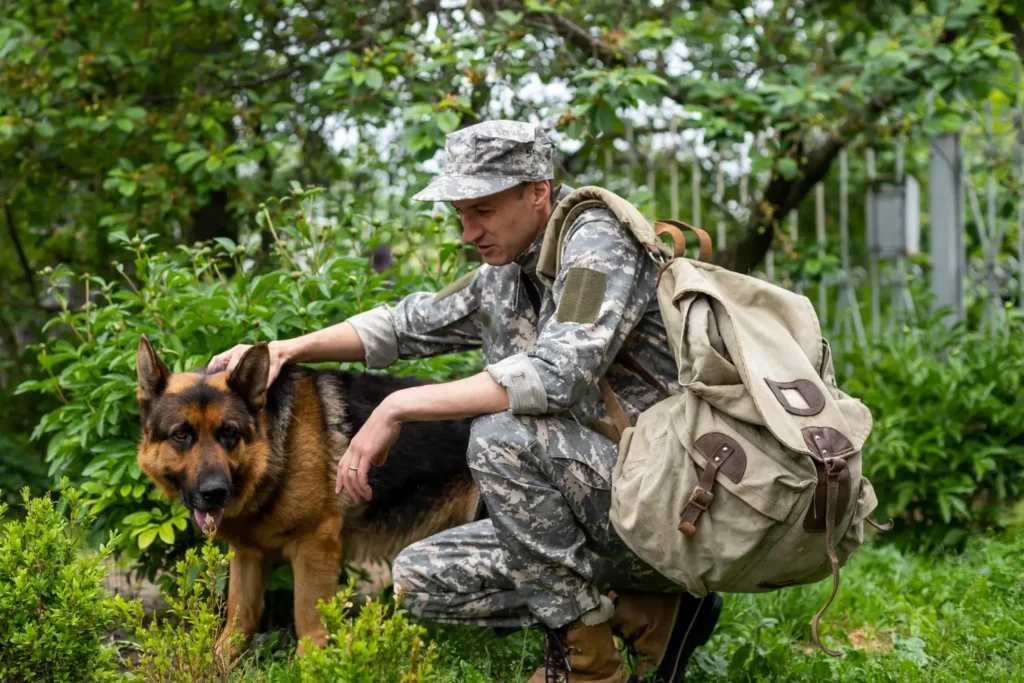
There is a distinction worth understanding before you bring one of these working german shepherds home: drive is not the same as energy. Energy is just the fuel in the tank. Drive is something more specific, a hardwired compulsion to track, chase, protect, retrieve, solve. You can drain the fuel and the drive is still there.
This is why you see working GSD owners run their dog for two hours and come home to a dog that immediately starts patrolling the fence line or fixating on the neighbor’s cat. The physical exercise did not satisfy what the dog actually needed. It just moved the problem around.
Real exercise for these dogs means activities with a purpose: tracking work, obedience drills under distraction, off-leash running with direction changes, scent detection games, swimming. Something the dog has to think through, not just physically complete. Twenty minutes of focused training often does more than two hours of fetch. Our guide on how much exercise a German Shepherd needs goes into more detail.
Grooming
Working line coats are generally shorter and coarser than show line dogs, which makes grooming somewhat more manageable. That said, they still shed, especially during the seasonal coat blows in spring and autumn. Brushing two to three times a week during normal periods, daily during shedding season, keeps it under control. An undercoat rake works better than a standard brush for getting down into the dense underlayer.
Health
Working line German Shepherds are generally considered healthier than show line dogs, particularly in terms of hip and elbow dysplasia. The straight back of working line dogs reduces some of the structural stress that the more angulated show line conformation creates. That said, no line is completely free of health issues.
The conditions worth knowing about are the same across all GSDs: hip and elbow dysplasia, degenerative myelopathy, bloat (GDV), and exocrine pancreatic insufficiency. The OFA maintains health databases for all of these conditions. Any breeder worth considering should be health testing both parents and providing documentation.
DDR lines in particular have a reputation for above-average hip health, a result of the intensive selection pressure applied over the decades of the East German breeding program. This is one of the reasons DDR blood is still actively sought by breeders across all lines today.
Owning any German Shepherd is a real financial commitment over the dog’s lifetime. Our breakdown of monthly GSD ownership costs gives you a realistic picture before you commit.
Working Line vs Show Line: The Short Version
If you are trying to decide between a working line and a show line GSD, here is the clearest way to think about it.
- Working line: straight back, compact build, sable or black coat, high drive, needs a job, better suited to experienced owners or active families committed to training
- Show line: more angulated rear, broader build, typically black and red or black and tan coat, calmer temperament, better suited to most family situations
Neither is better. They are different tools for different situations. Our complete guide to German Shepherd types covers all the lines in more depth, including the American show line and how it differs from both European show and working lines.
Finding a Working Line German Shepherd
If you have read this far and a working line GSD still sounds right for you, the next step is finding a breeder whose program you can trust. The working line world has great breeders and it also has people selling “DDR” or “Czech” puppies who have no real knowledge of the lines and no health testing to back up their claims.
Things to look for:
- Health certifications for both parents. OFA for hips and elbows minimum. No documentation, no deal.
- Working titles on the parents. A breeder producing working line dogs should have dogs that actually work or compete. Titles in IGP, IPO, or similar sports are evidence that the dogs have been evaluated against real standards.
- Transparency about temperament. A good breeder will ask you hard questions about your experience and lifestyle. One that just wants to sell you a puppy is a warning sign.
- Documented pedigree. DDR and Czech lines should have verifiable ancestry. Ask to see it.
Our guide to finding the best German Shepherd breeders covers what to look for and what to avoid in more detail.
If you are still deciding between a working line and a show line dog, or between a German Shepherd and another breed entirely, we are happy to help you think it through. Browse our available puppies or get in touch and we will point you in the right direction.
-
 Select options
Blossom
$1495Meet BlossomFemale 16 WeeksOne or both of this puppy's parents have undergone genetic testing.This puppy has had early neurological stimulation exercises. -
Select options
Beverly
$1495Meet BeverlyFemale 16 WeeksOne or both of this puppy's parents have undergone genetic testing.This puppy has had early neurological stimulation exercises. -
Select options
Harlow
$1795Meet HarlowFemale 13 WeeksOne or both of this puppy's parents have undergone genetic testing.This puppy has had early neurological stimulation exercises. -
Select options
Iris
$1795Meet IrisFemale 13 WeeksOne or both of this puppy's parents have undergone genetic testing.This puppy has had early neurological stimulation exercises.
Frequently Asked Questions
What is the difference between a working line and show line German Shepherd?
Working line GSDs are bred for drive, function, and working ability. Show line dogs are bred to meet visual conformation standards. The practical differences are significant: working lines tend to have straighter backs, higher drive, and more intense temperaments. Show lines are broader, calmer, and generally better suited to family life without intensive training.
Are working line German Shepherds good family dogs?
They can be, with the right family. An active household with experience handling dogs, time to train consistently, and a genuine interest in working the dog is a great fit. A family looking for a calm, low-maintenance companion is probably not. The key word is “can be” and it depends heavily on the owner as much as the dog.
What is a DDR German Shepherd?
DDR stands for Deutsche Demokratische Republik, East Germany. DDR German Shepherds come from a breeding program developed under East German government control after World War II, producing dogs with blocky heads, heavy bone, dark pigment, and a reputation for sound hips. They tend toward defensive temperaments and are loyal, territorial dogs that require strong socialization.
What is a Czech German Shepherd?
Czech German Shepherds originated from Czechoslovakia’s military breeding programs and share roots with DDR lines. They tend to be leaner and more agile than DDR dogs, with very high drive. Czech dogs are well regarded in sport and working circles for their intensity and clear-headedness. They are among the more demanding of the working line types to own.
Do working line German Shepherds have better health than show line dogs?
Generally yes, particularly for hip and elbow health. The straight back of working line dogs reduces structural stress on the joints compared to the more angulated show line conformation. DDR lines in particular have a strong reputation for sound hips. That said, health testing is still important regardless of line, and no line is completely free of hereditary conditions.
How much exercise does a working line German Shepherd need?
More than most people expect. Two hours per day of real activity is a starting point, not a ceiling. And the quality of the activity matters: training sessions, sport work, and mentally engaging tasks are as important as physical exercise. A working line GSD that only gets walked will not be a happy dog.
